Fakes and Counterfeit Magic Cards – How to identify them

How to detect fakes and counterfeit Magic: The Gathering cards
Author: Philippe Zens
In today’s article, you will learn how to distinguish fake from real Magic cards. The good news: It’s not that hard!
Do you have to fear the fakes?
First things first: You do not have to fear to get flooded with counterfeit Magic trading cards. We buy over 600,000 cards and sell over 400,000 cards (that’s non-bulk cards) a year. During the buying process, we identify fakes and use them to train our staff. The number of counterfeit cards we find is pretty low.
The main reason: Really good fakes that pass the eye test are almost non-existent.
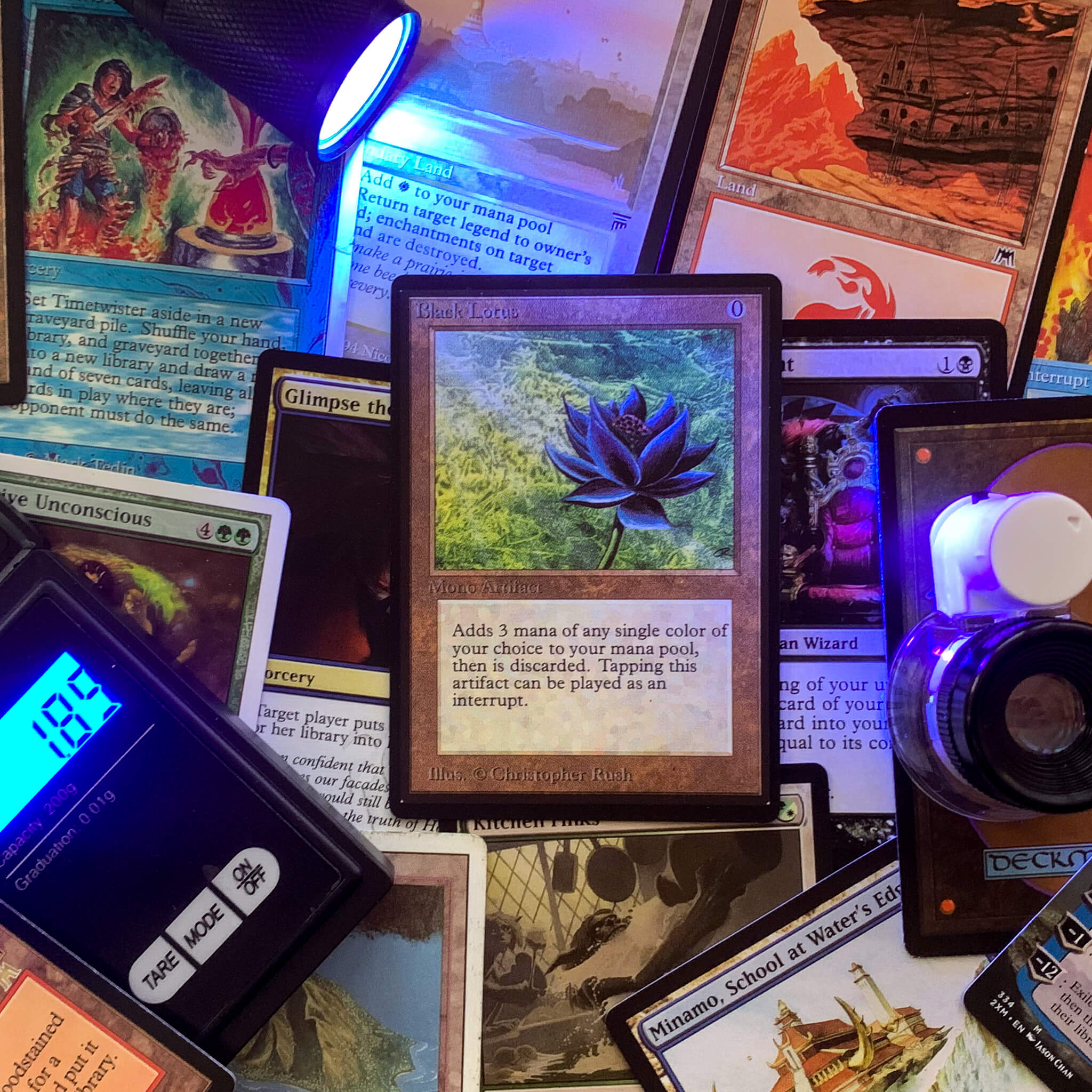
No One Test Can Identify Them All
Sadly, there is no single best test that will guarantee the authenticity of a Magic card. One of the reasons is that some MtG cards are really old.
During the times, Wizards of the Coast used all kinds of different printing techniques and materials. Also, counterfeiters got better and heightened their skill in creating those cards.
The field is pretty complex, but we’re not aiming for a full coverage. Rather, we want to provide you with simple and actionable tips and tricks.
Test with the help of an MTG store or vendor
At Three For One Trading we are happy to share our knowledge and answer all your questions about this topic. Just send us a message.
Because it can be hard for us to judge a card from pictures, we always recommend asking for a second opinion at your local game store. They will very likely be able to make some tests and verify a card for you.
Watch our video about fakes
Beim Vergleich mit dem Greem-Dot-Test bei Minute 3:50 des Videos haben wir einen Fehler gemacht und eine Karte, die wahrscheinlich echt ist, als „Fälschung“ bezeichnet. Wie an mehreren Stellen im Video erwähnt, ist es von größter Wichtigkeit, immer mehr als einen Test durchzuführen, eine nachweislich echte Karte zum Vergleich heranzuziehen und im Zweifelsfall einen zusätzlichen Experten zurate zu ziehen.
The 3 most important tests to identify fake Magic cards
There are exactly three cornerstone tests for checking the authenticity of a Magic the Gathering trading card. Each will look at a different area of a card:
- Weight
For this test, we check the card’s weight by using a precision scale (Foraco Scale 500g x 0.01g). An authentic Magic: The Gathering trading card should weigh between 1.7 and 1.8 grams (about 0.06 ounces). A slight deviation in both directions is possible and okay.
The weight of the card is affected by the materials used in the manufacturing process. Since counterfeits use different materials, the weight frequently deviates from the original.
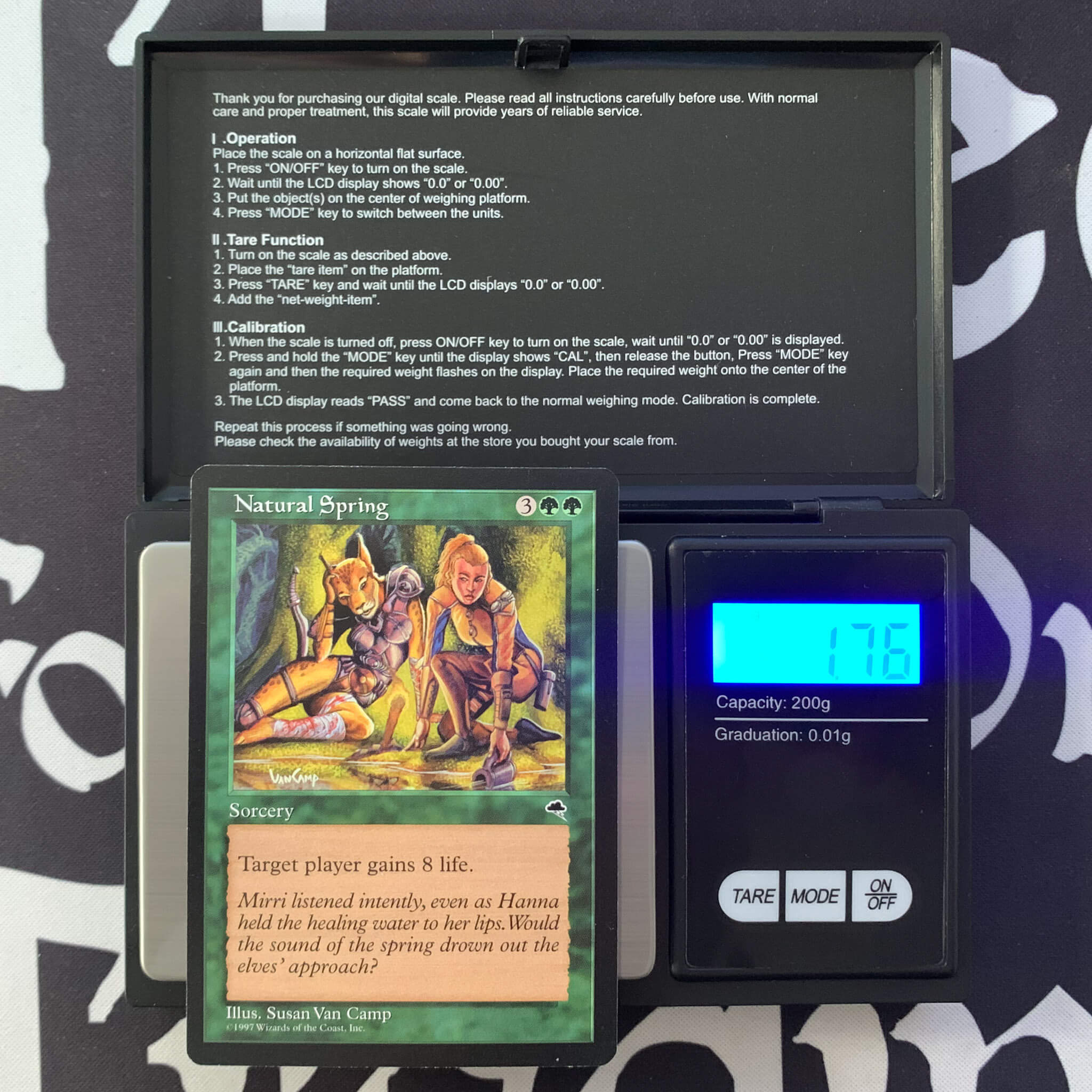
REAL This card weighs 1.76 grams and is therefore exactly in the center of the weight margin for being considered real.
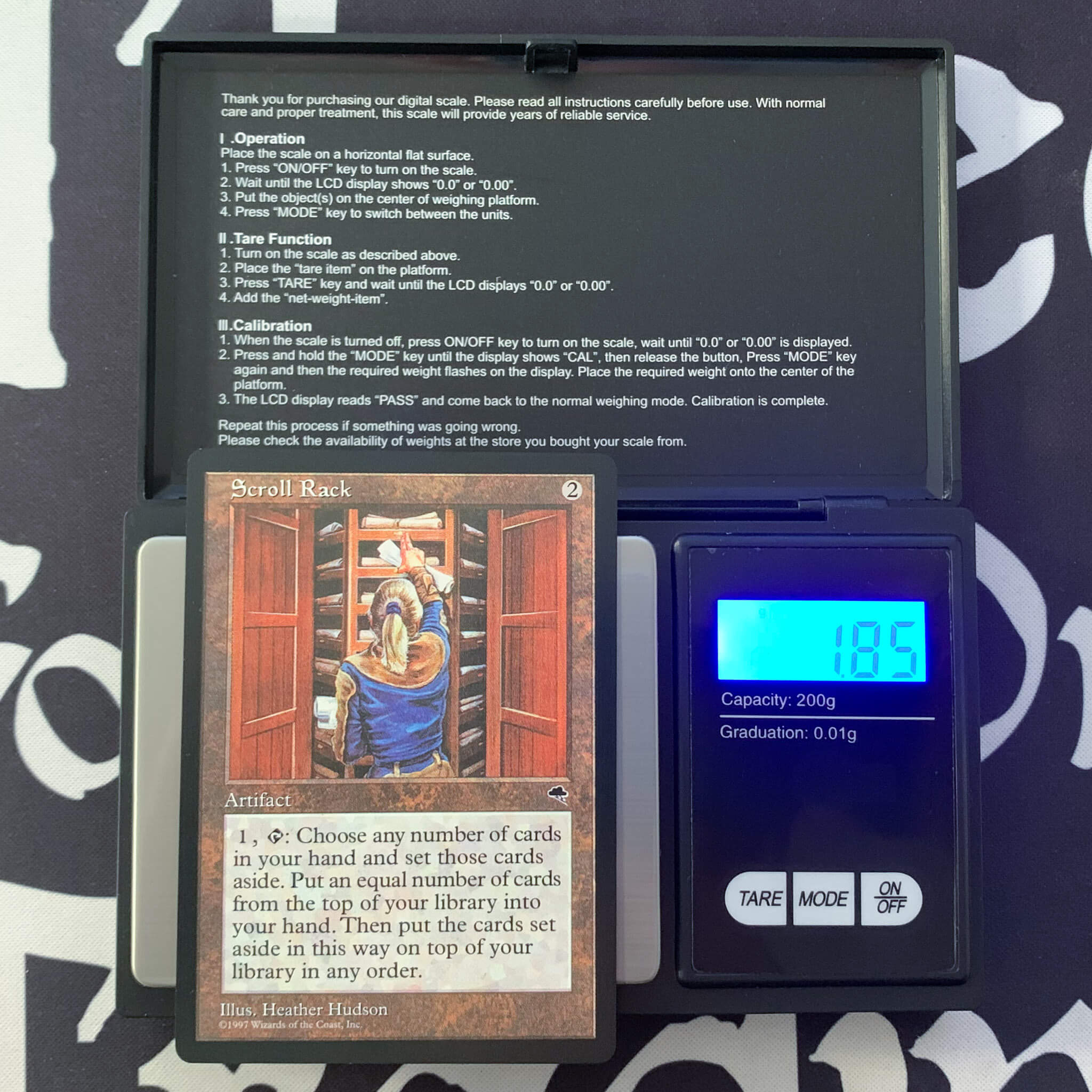
FAKE However, this card weighs 1.85 grams and is therefore way above the 1.8 limit. This raises serious concerns for being a fake card!
So called “rebacked” cards will not pass this test. For the very first fakes, counterfeiters used Collectors’ Edition and International Edition cards to create copies of Beta cards. Due to the glue that was used, those fakes were noticeably heavier than real cards.
This test will also reveal most fakes that were made in more recent years, as counterfeiters are not using the same paper. Those fake cards usually weigh around 1.9 grams (0.067 ounces) as they often contain more plastic than real MTG cards.
2. Print Quality of the Card
We are using a Fancii Jewellery Magnifier (20x), but any magnifying glass will do for these kinds of tests.
An authentic Magic: The Gathering card has distinct features. Those have not been replicated yet. MtG cards are industrially printed. In a first step, all colors are printed dot by dot and layer by layer. All those dots and layers create the picture of the card that you know. This kind of print is unable to print sharp edges, straight lines and text.
Therefore, the black frame and text of the card is printed in a different print type that is not usually used with fakes and is visible with a magnifying glass.
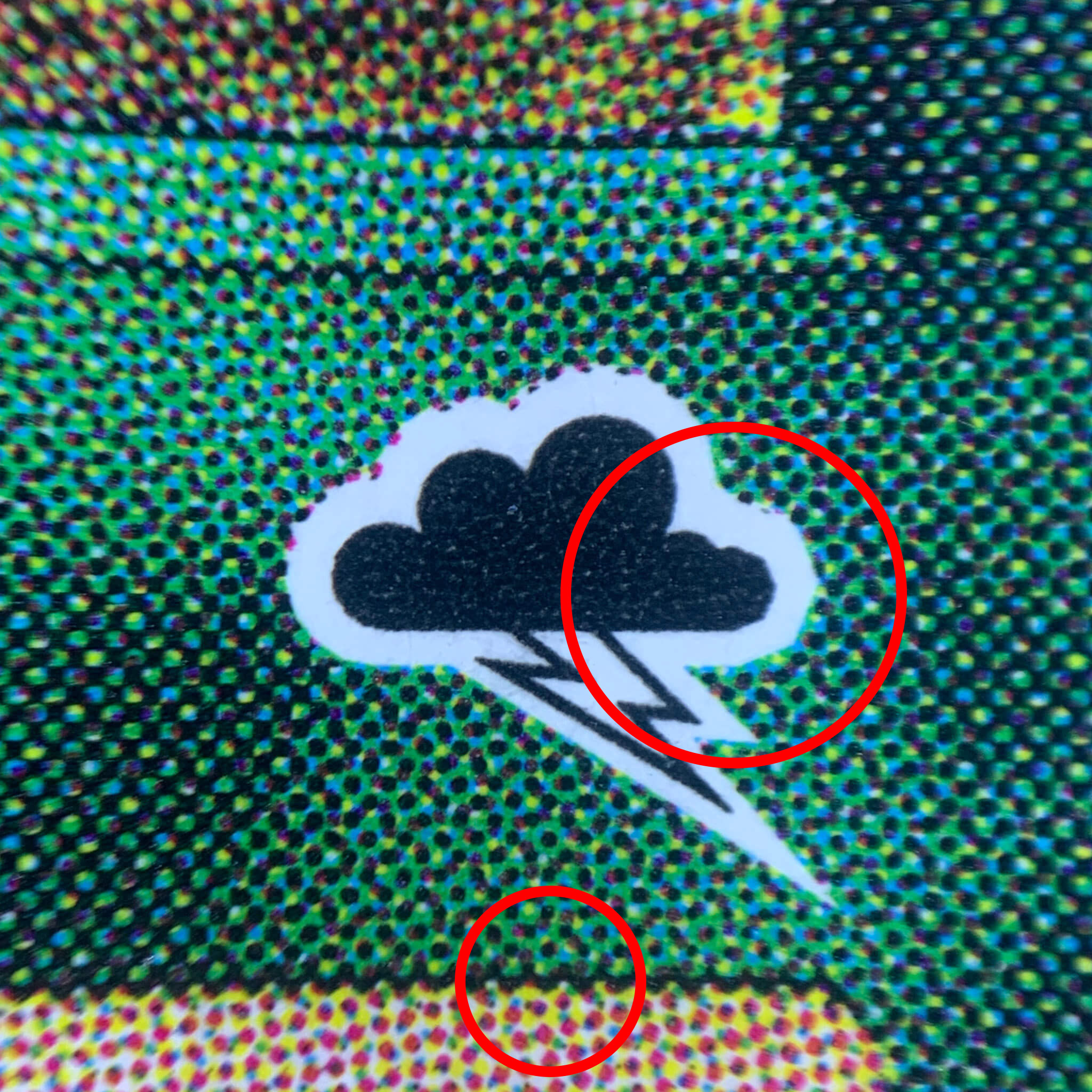
REAL This is what the print layout looks like on a real card. You can clearly distinct between the black lines of the expansion symbol and the printed color dots.
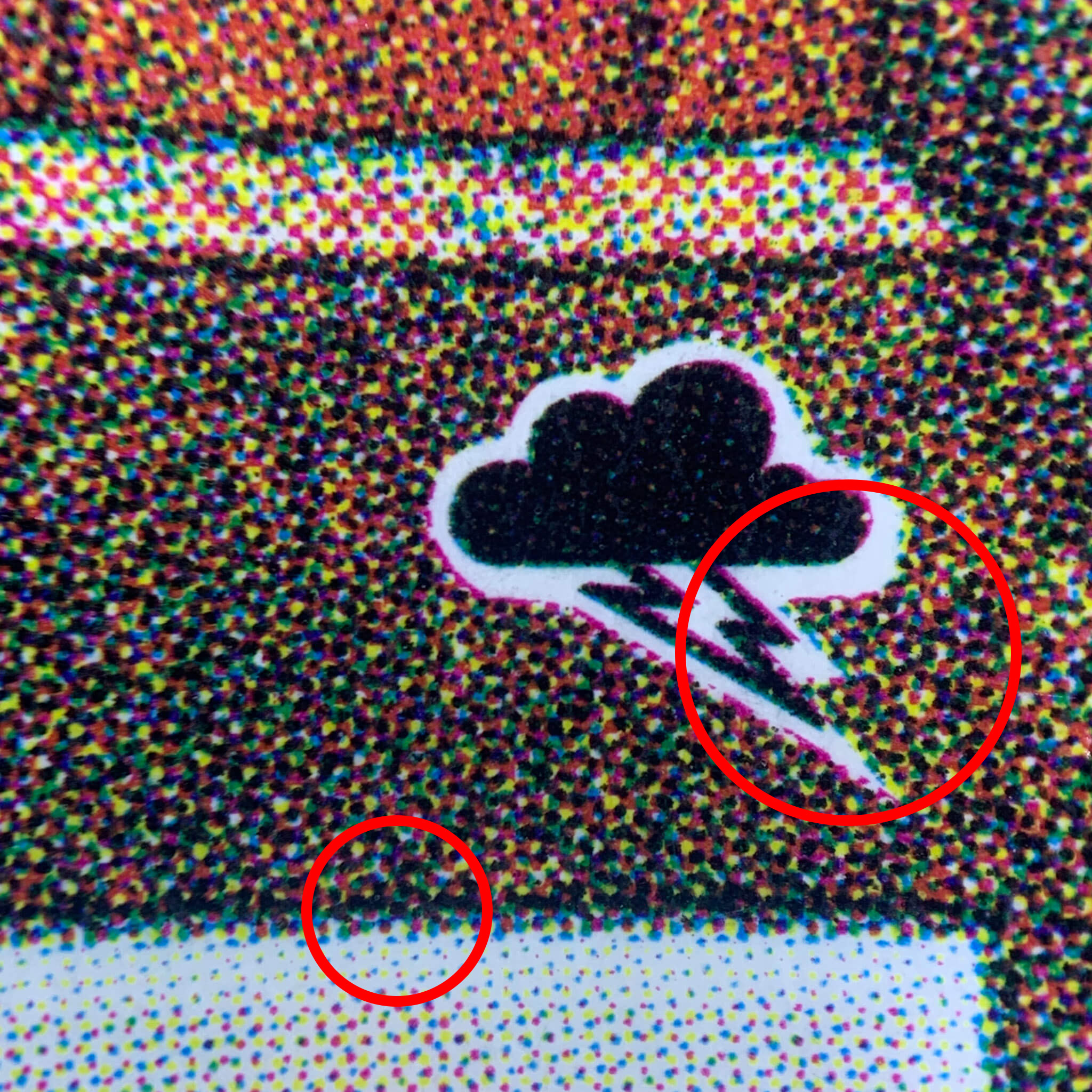
FAKE On this example the lines are made of black dots and are directly intermixed with the blue, red, yellow and green dots.
2.1 Green-Dot Test
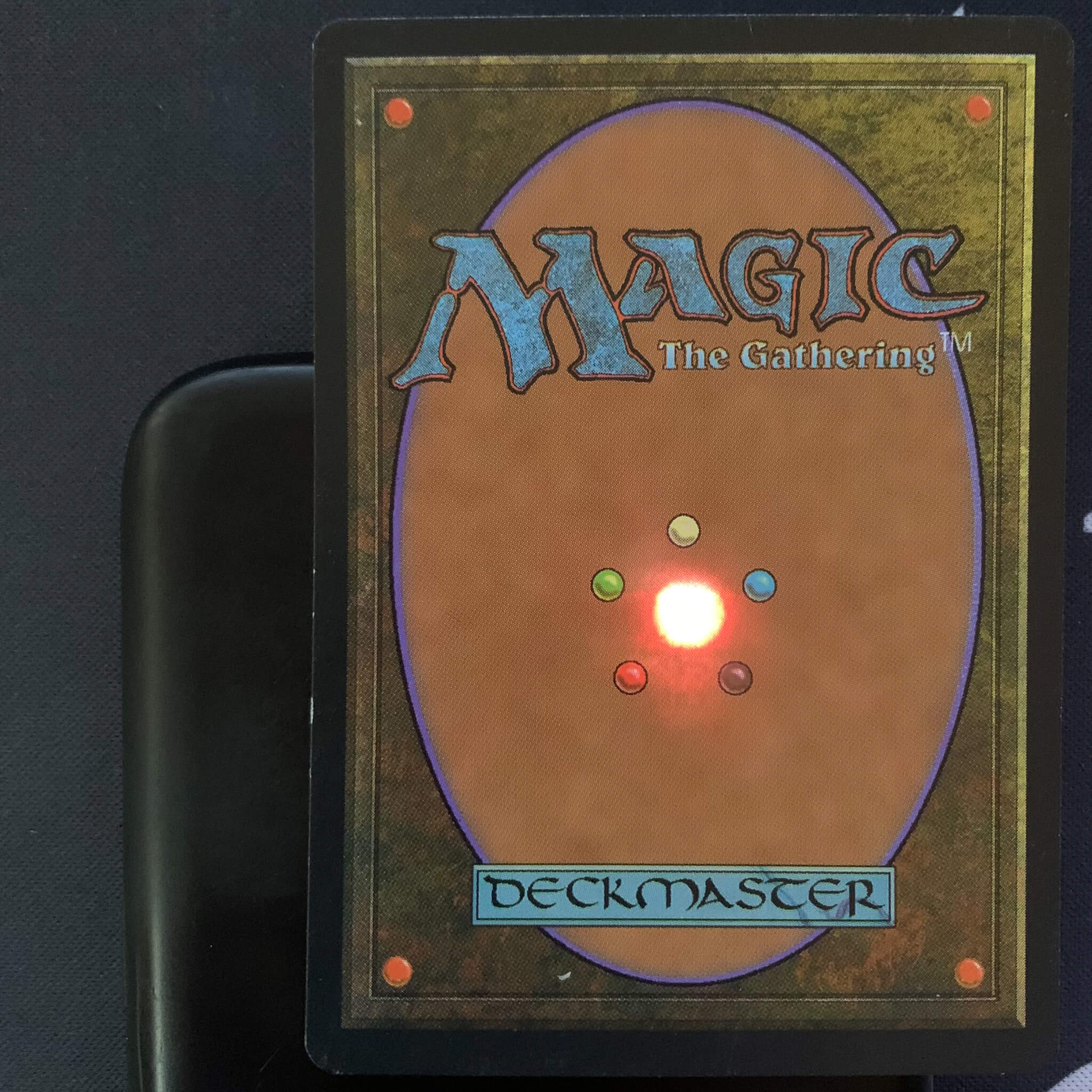
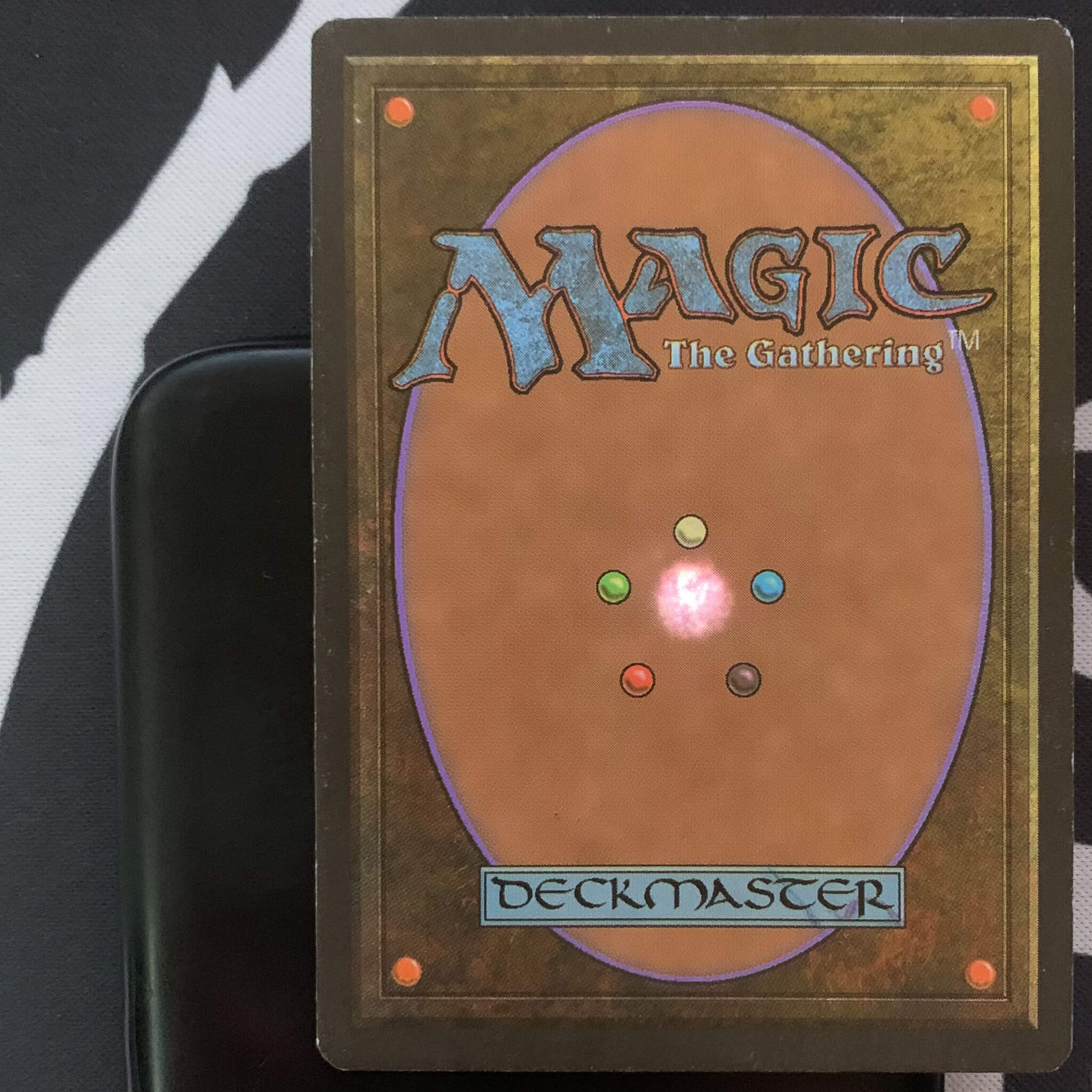
Within the green dot on the back of the card, you can find a yellow spot. Within this yellow spot, there are four red dots in an L-shape. In addition, the green dot has to be surrounded by a saturated black circle. Also check the previous test about print quality.
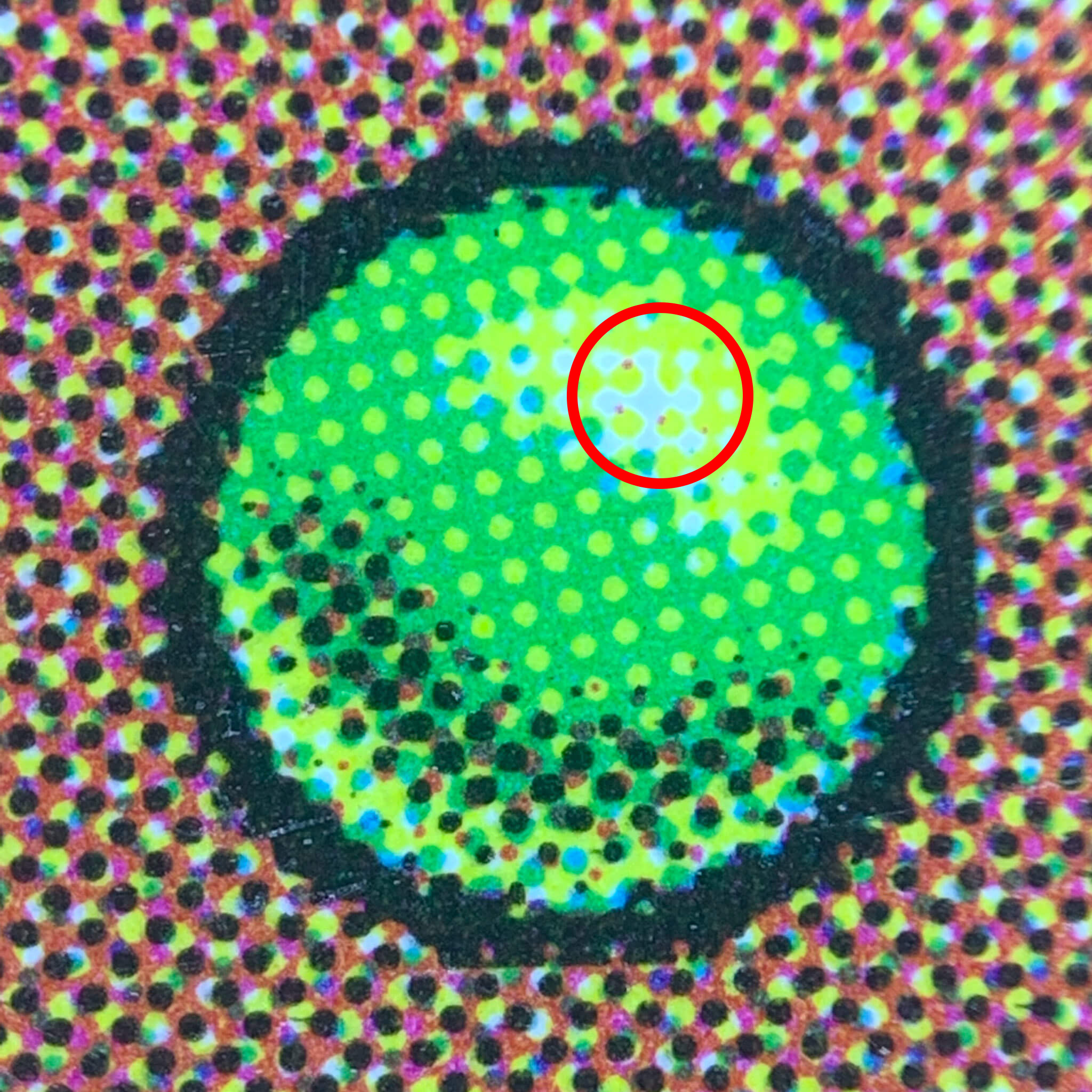
REAL You can clearly see the four red dots in an L-shaped formation inside the bright spot.
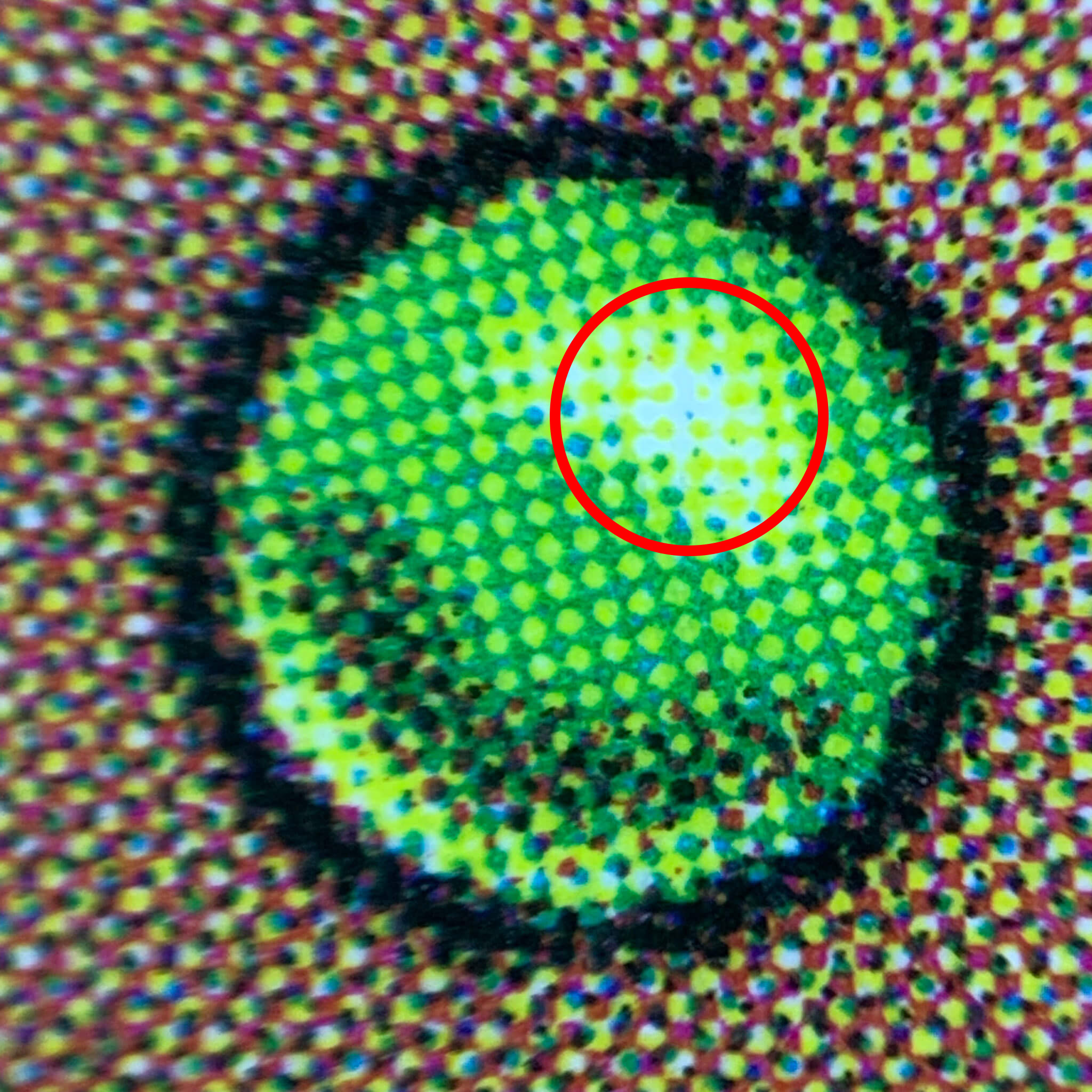
FAKE There is not a single red dot inside the bright spot.
2.2 Print Layer
We have learned this before: Cards are printed in various layers, and you can see those with your magnifying glass. The black card frame on the front, the mana cost of the card, the set symbol and its text are printed at the end of the printing process.
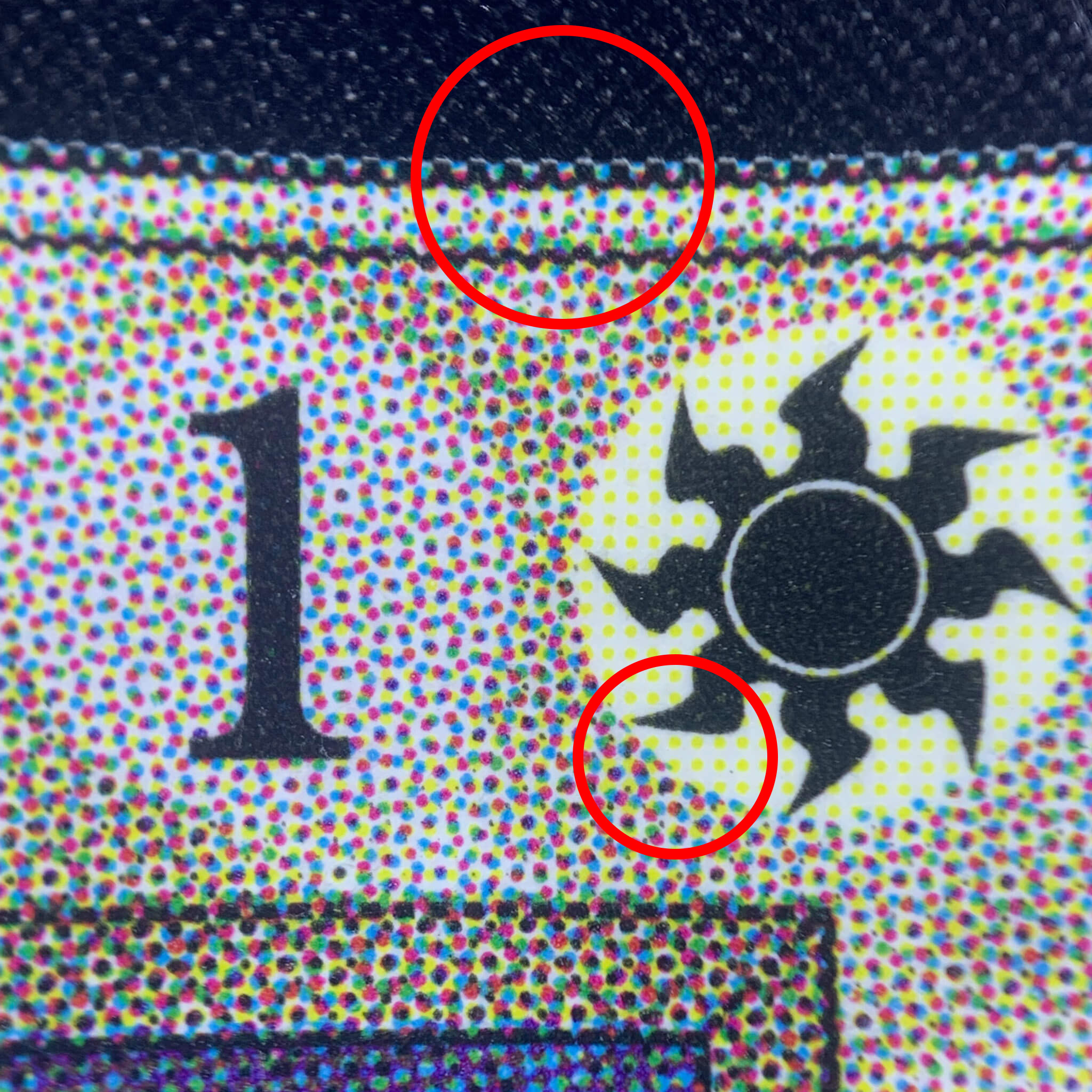
REAL There’s a clear distinction between the background and the other layers. No colorful dots are visible inside the black frame or the mana symbol.
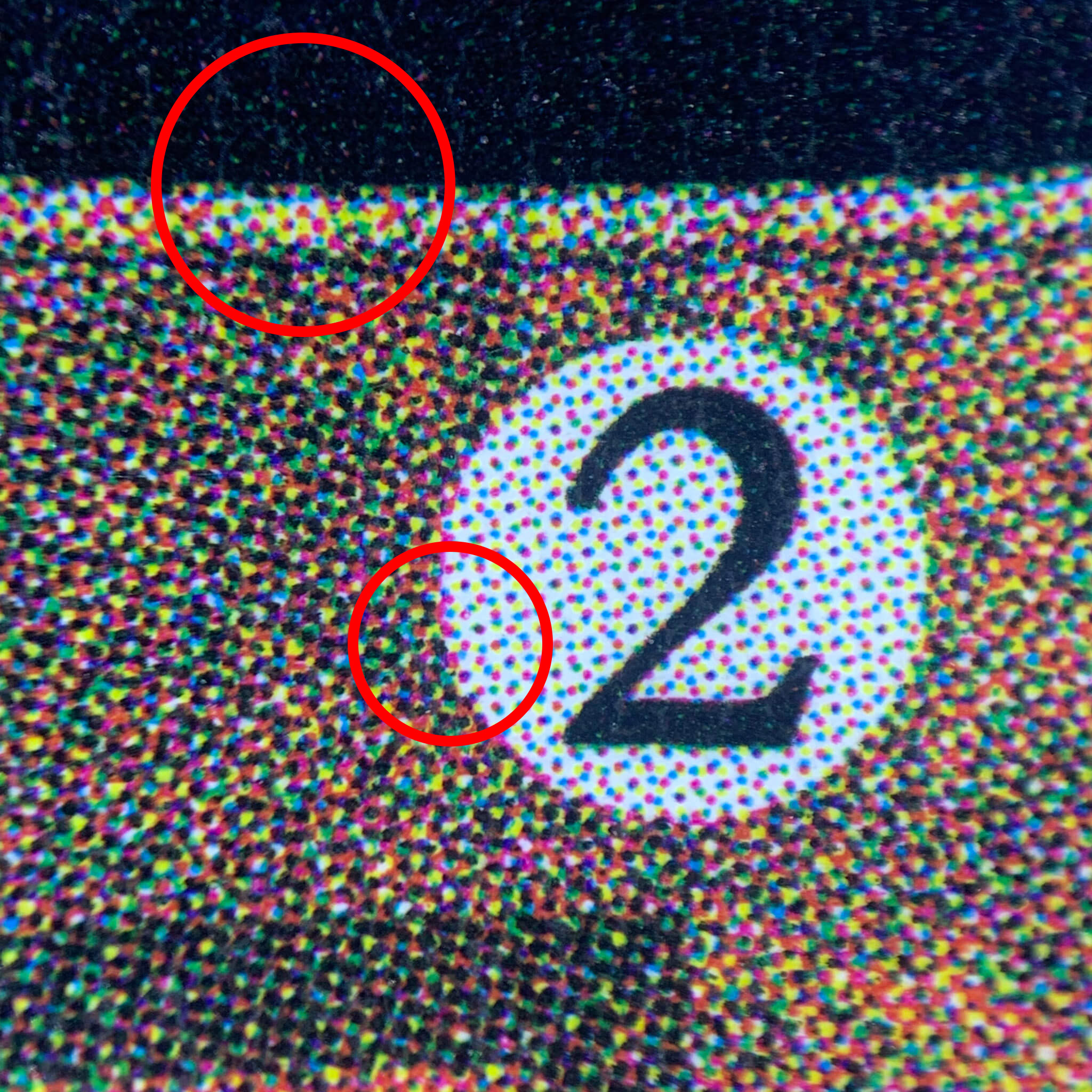
FAKE Colorful dots are visible behind the black card frame and are mingled with the edge of the mana symbol.
2.3 Rosette pattern
The pattern of the printed dots has to be even and not blurry. Again, the type of print used can be seen with a magnifying glass.
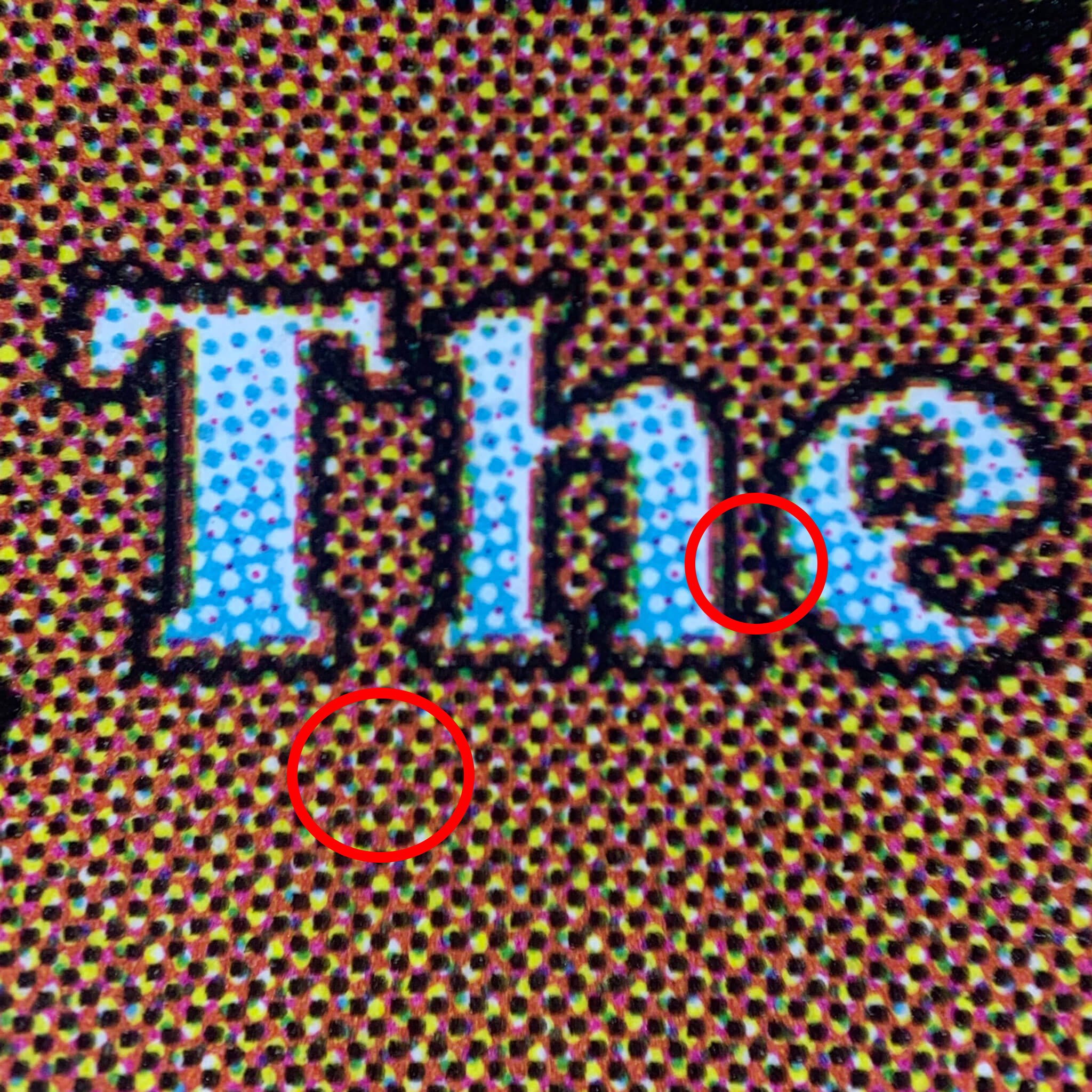
REAL As you can see on this example, the dots and lines are sharp as a knife. In addition, the framing of the text very easily distinguished from the rosette pattern.
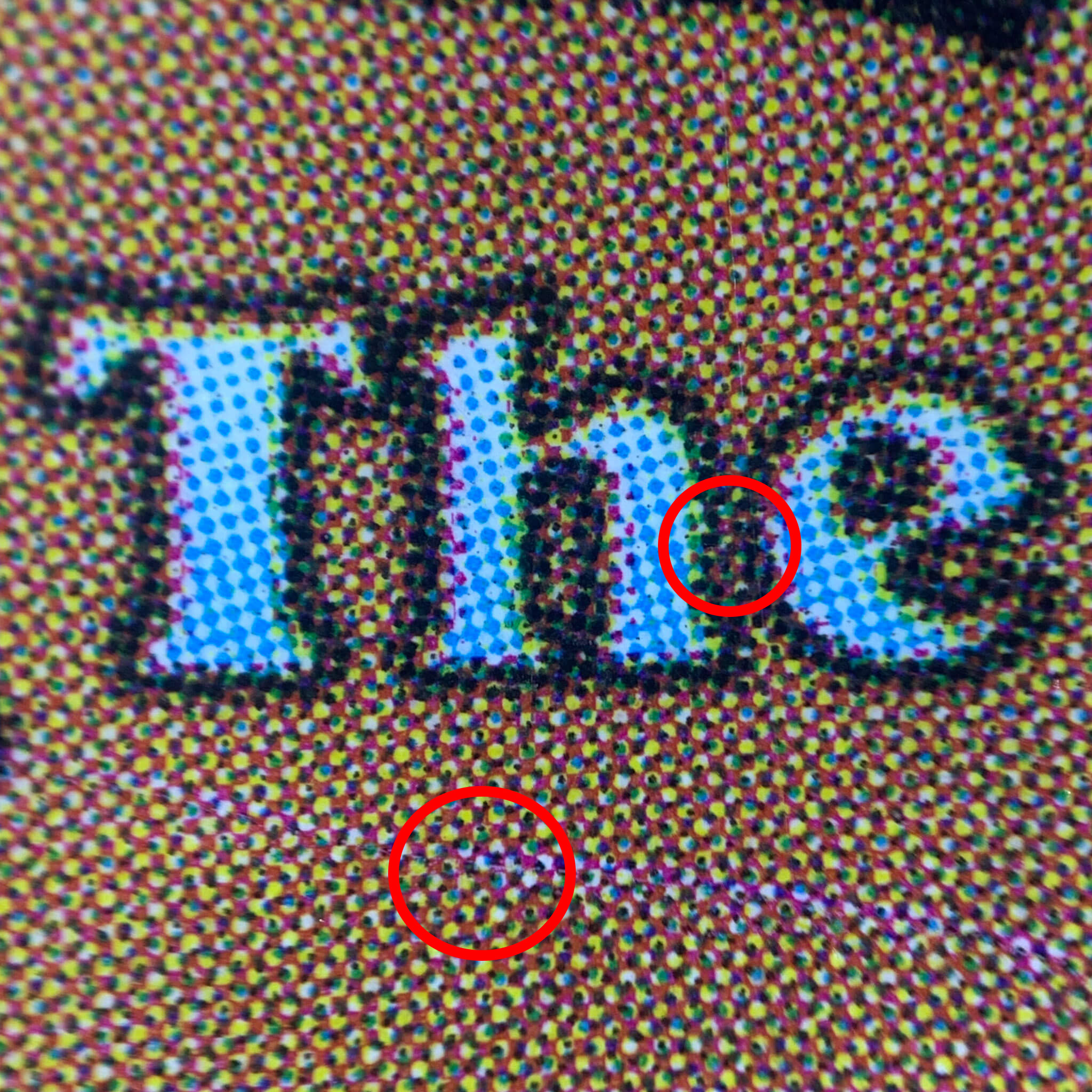
FAKE The dots have different sizes, are very blurry, and the color is not as saturated than on the real card. The dots don’t seem to have a clear pattern and are scattered randomly.
3. Light test – direct & indirect
You have to compare the card in question with a similar, known, authentic card. On the one hand you check how opaque the card is and on the other hand you check the reflection with a black light.
It is important to compare the suspected fake with a card from the same set and color. Skipping this step can easily result in a false positive.
3.1 Light Permeability
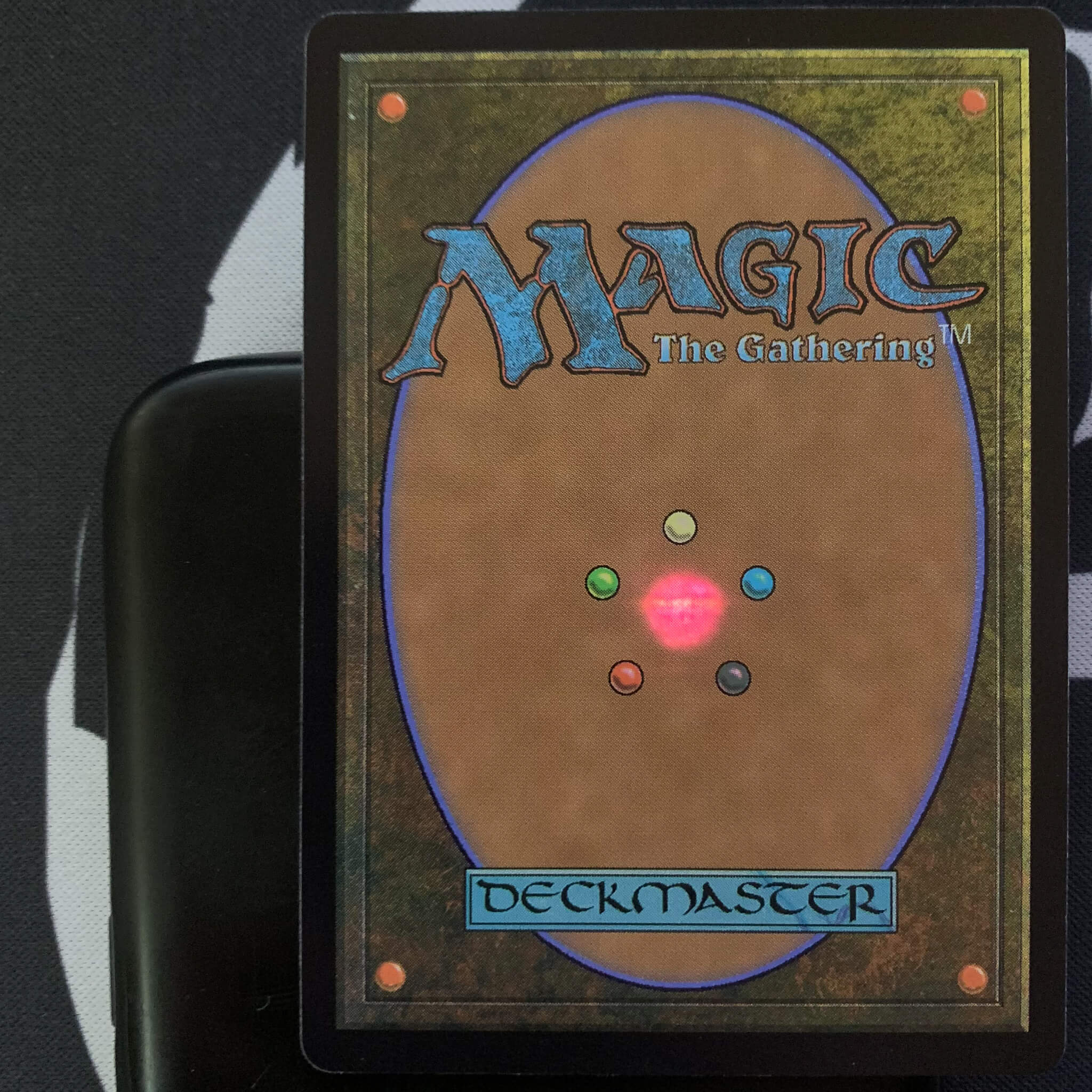
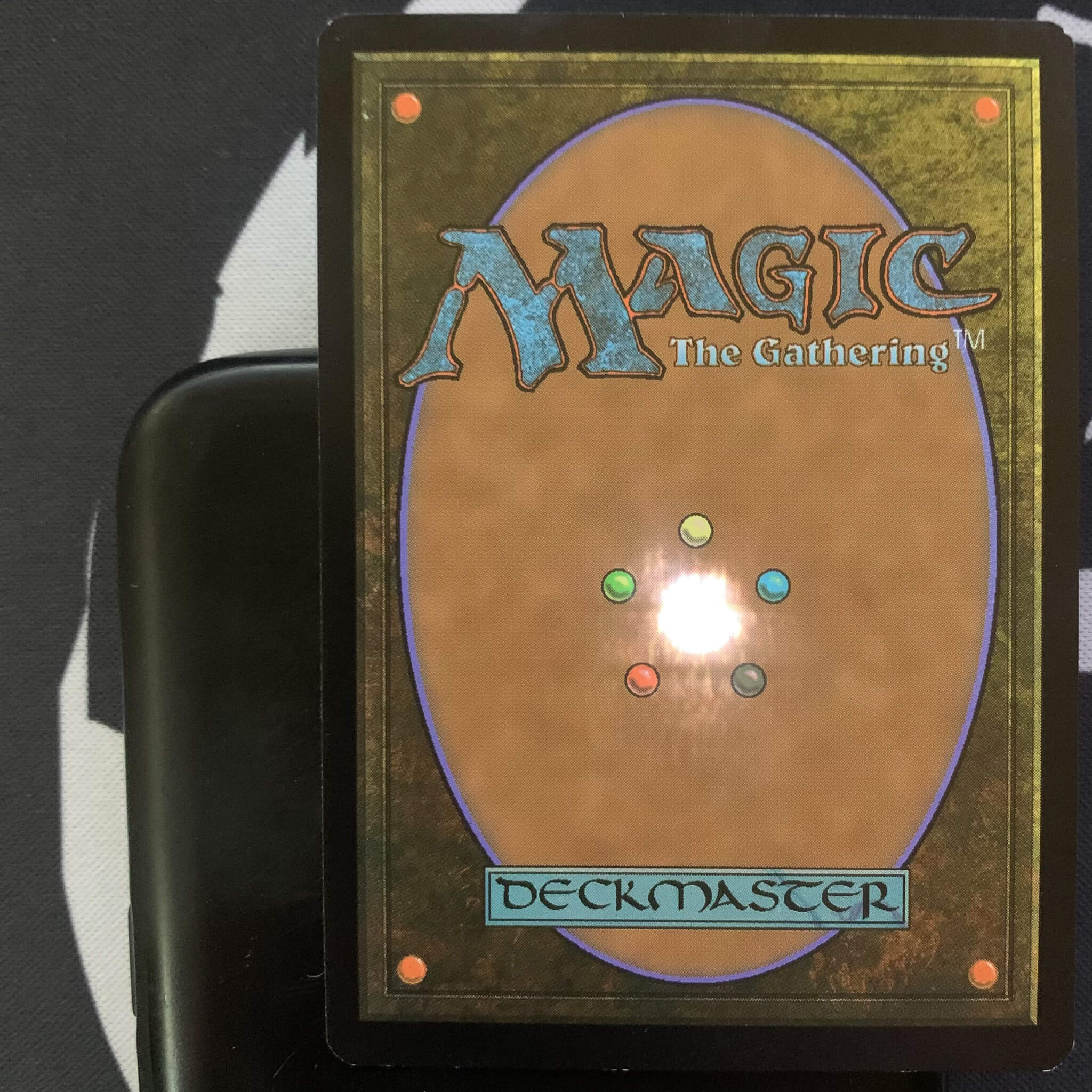
The suspected fake should, if real, let through the same amount of light as a genuine MtG card. The light cone should be even and show both sides of the card in it.
A lot of fakes are opaque and almost let no light through. In some, but a lot rarer cases, the fake lets through more light than an authentic card. In both cases, the fake fails our test.
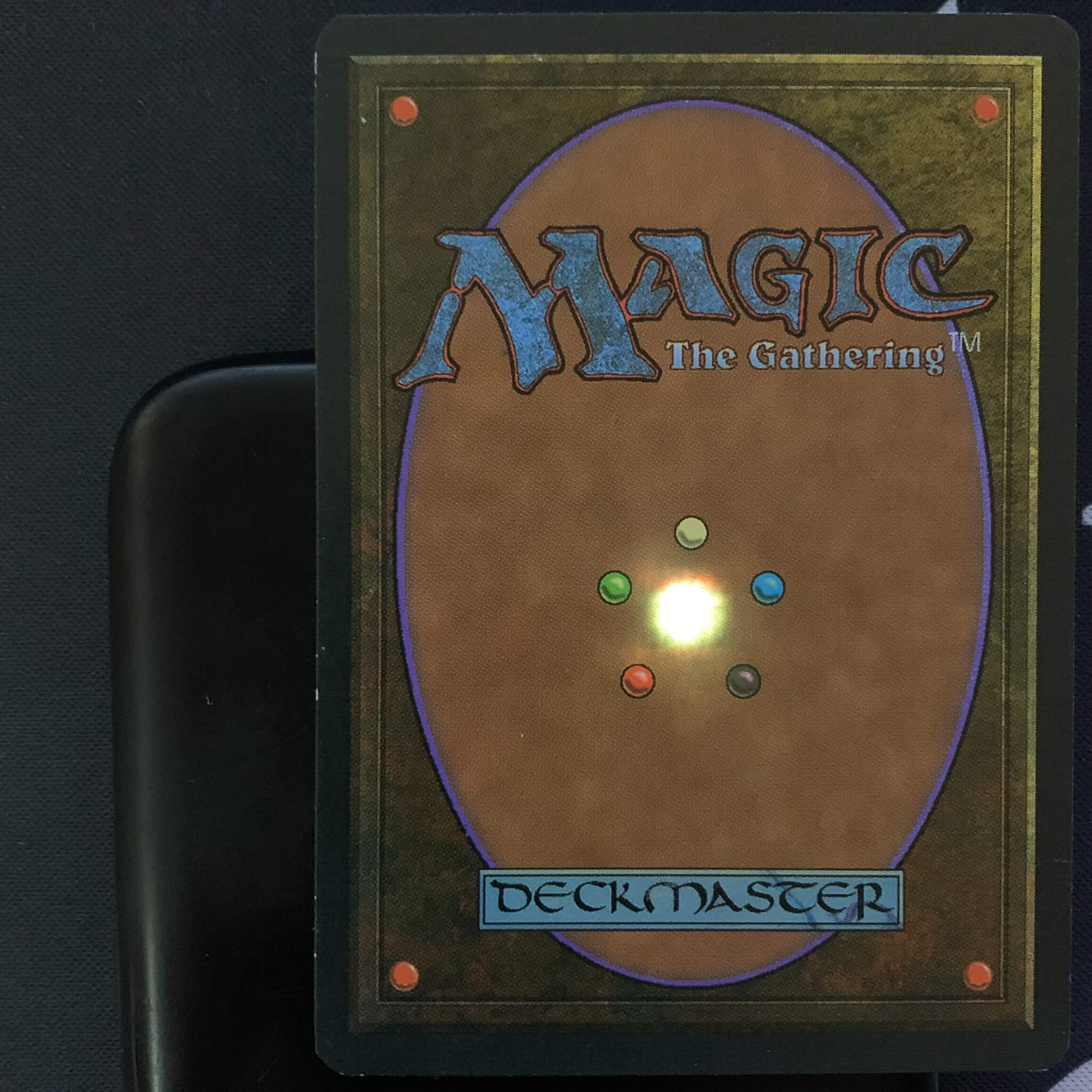
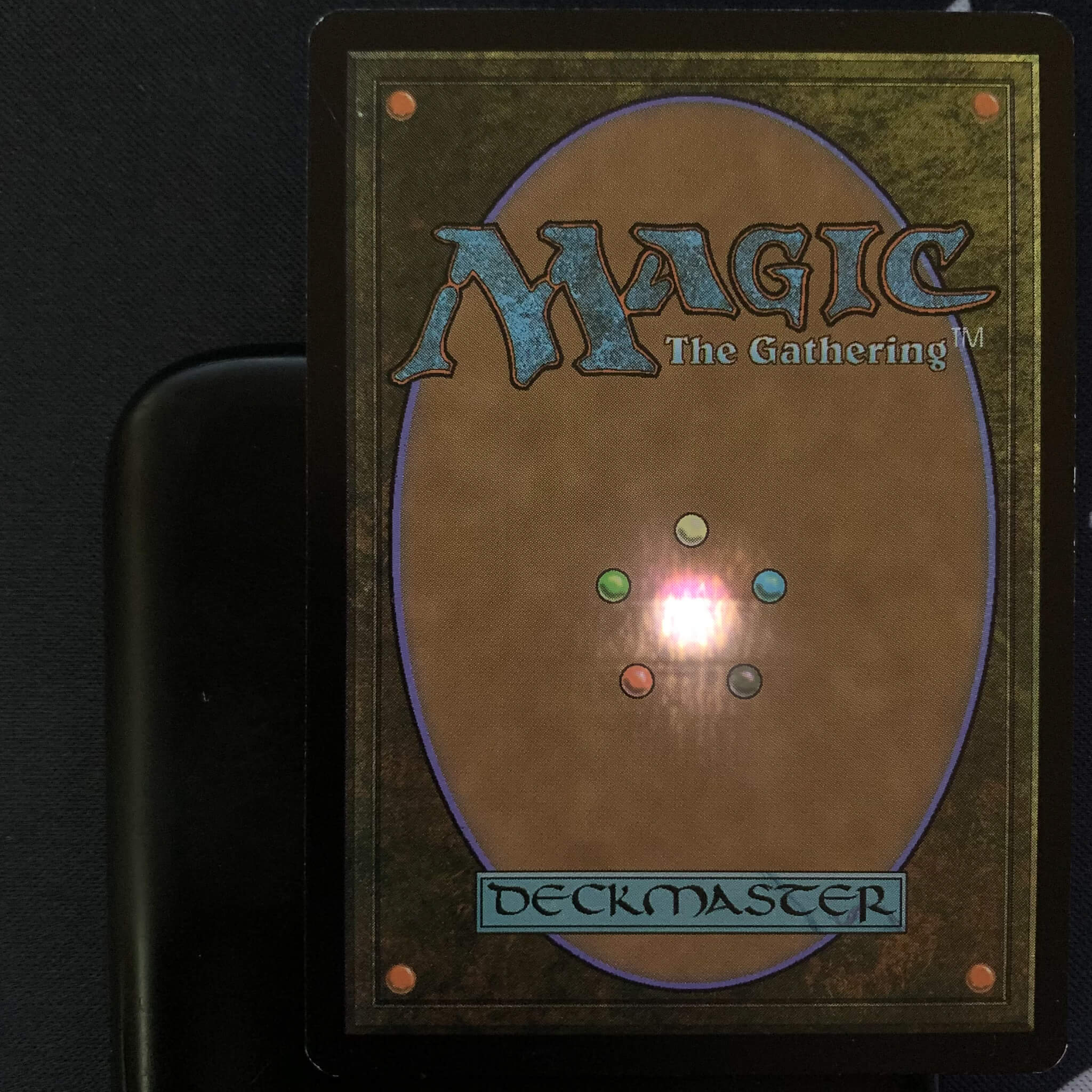
REAL These are all real cards, but you can see there are huge differences in how the light is let through. This all depends on the age of the card, the colors on the front side and if it has a blue core (most cards have it, some, like a print run from Ice Age does not).
Therefore, it is very important that you always compare two identical cards (same name, same set) with each other in order to identify the fake with this light test.
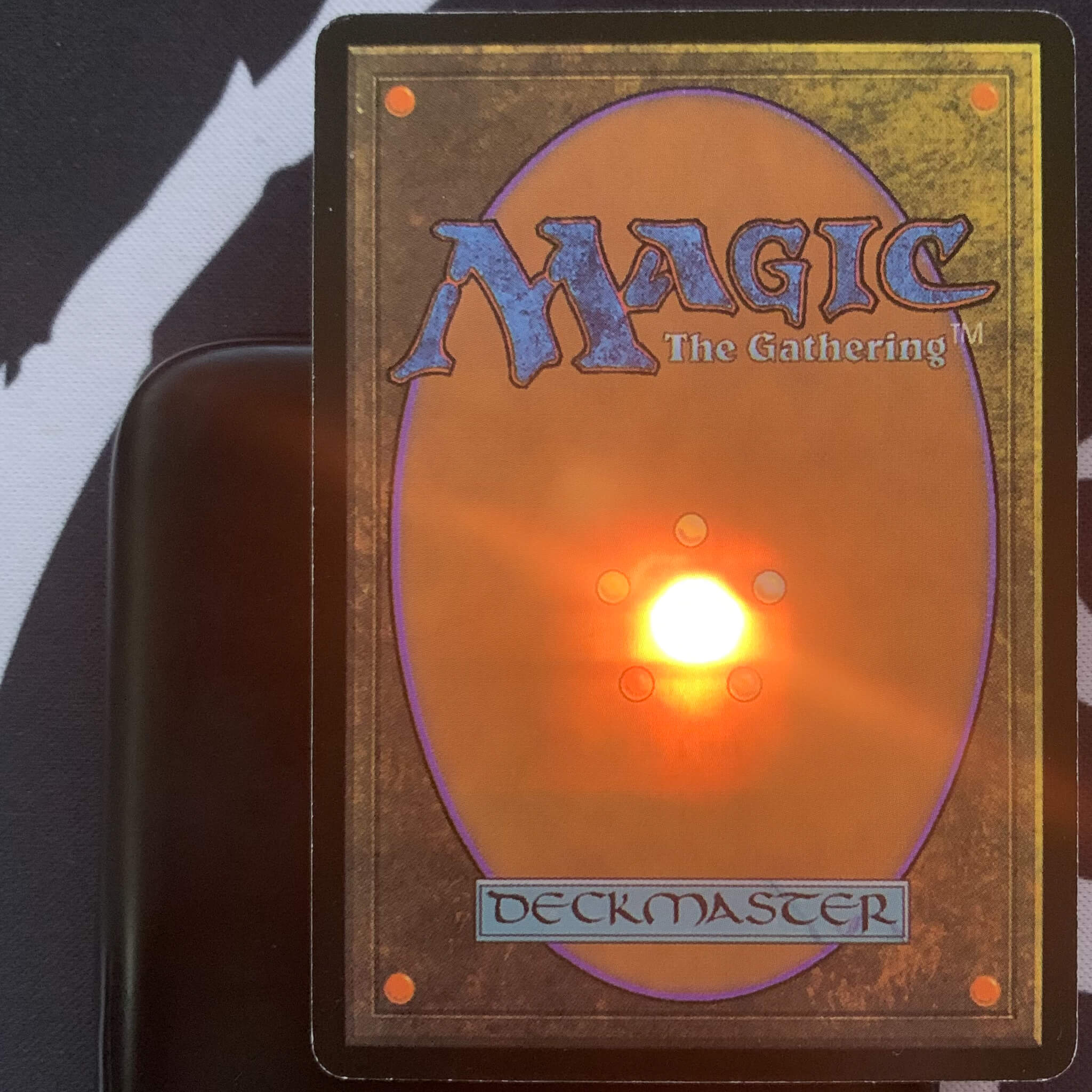
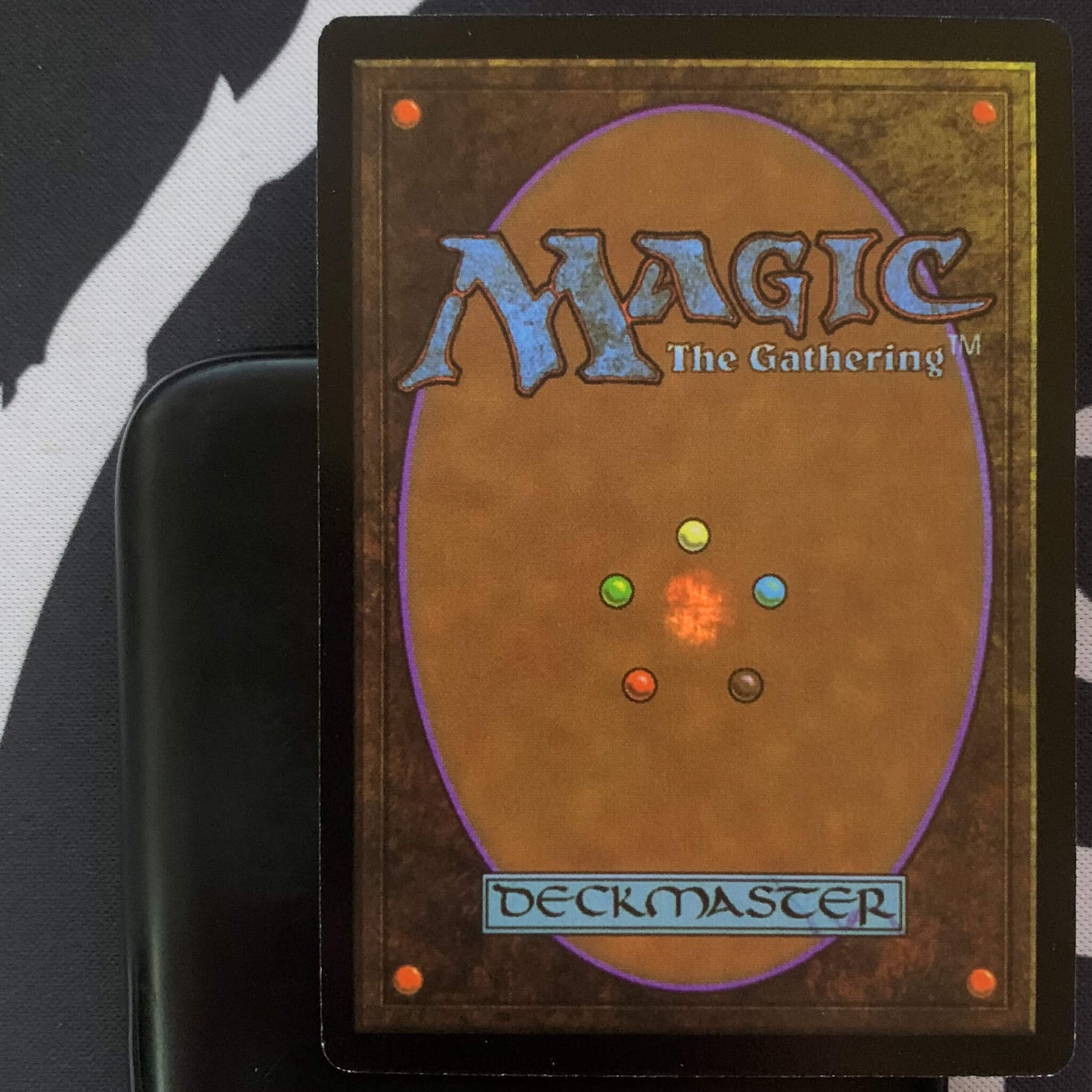
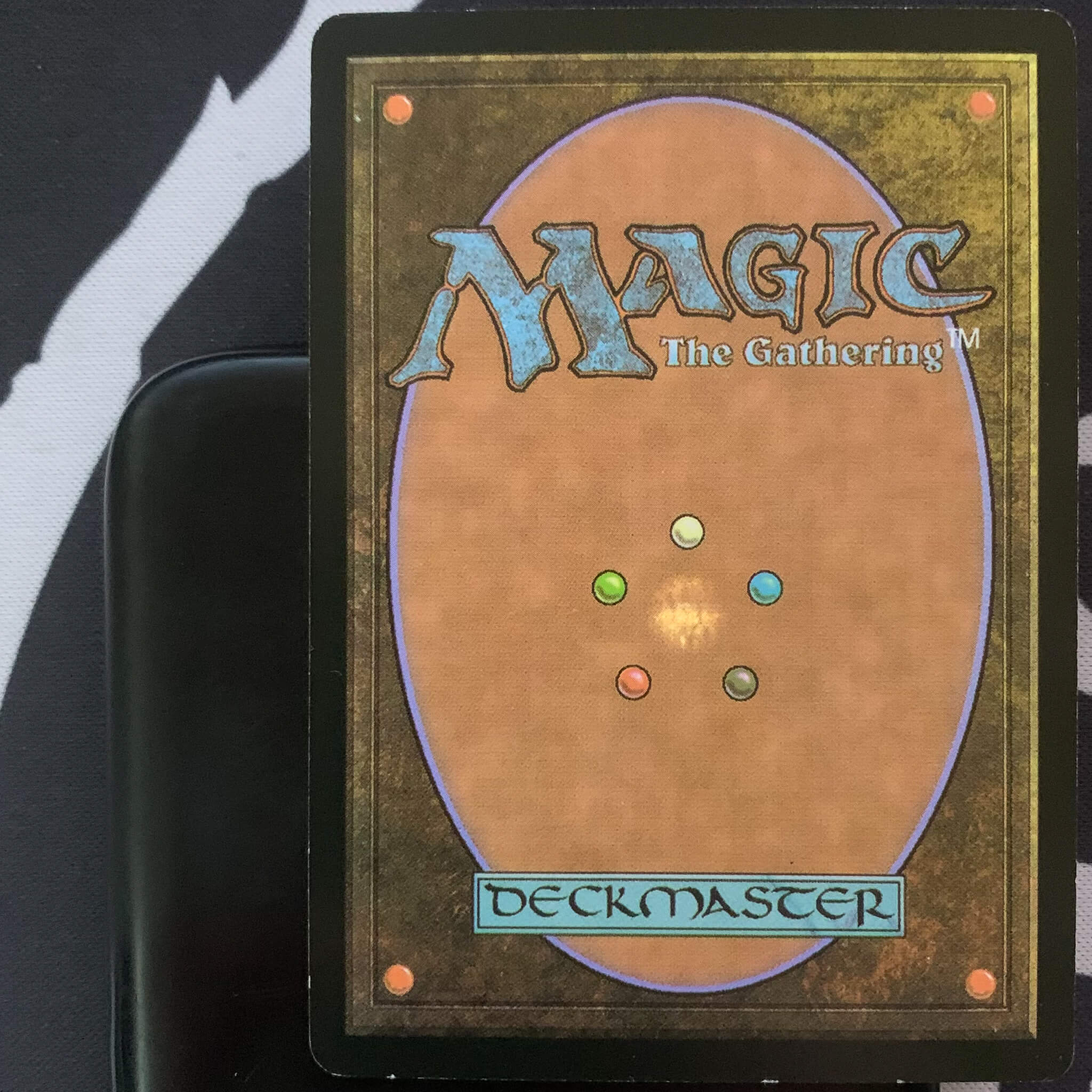
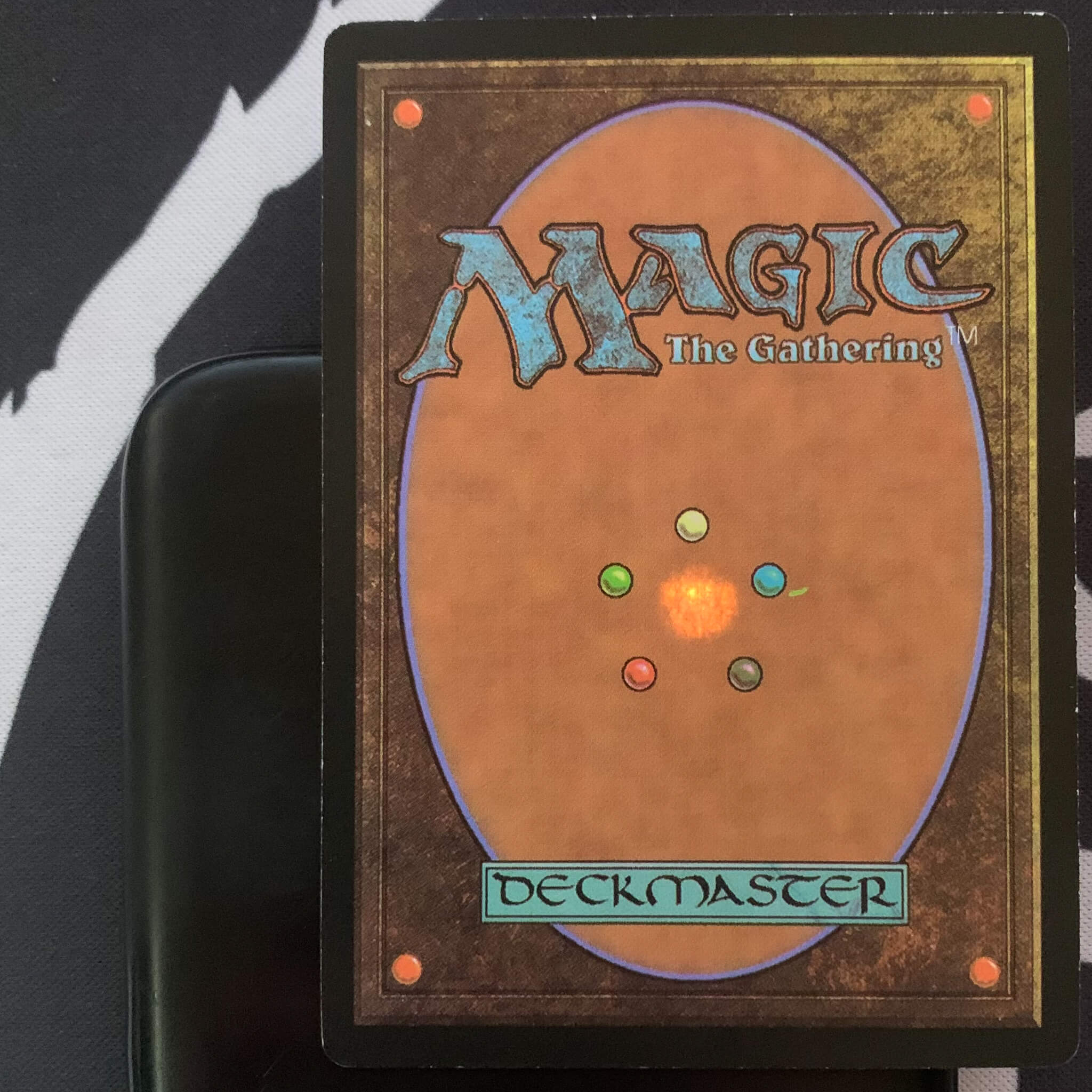
FAKE All of these cards are fakes and as you can see, they also show many different results under the flashlight test. The biggest takeaway from these examples is, that the light that gets through is oftentimes very dim, or it can also be very bright.
3.2 Reflection Using Black Light
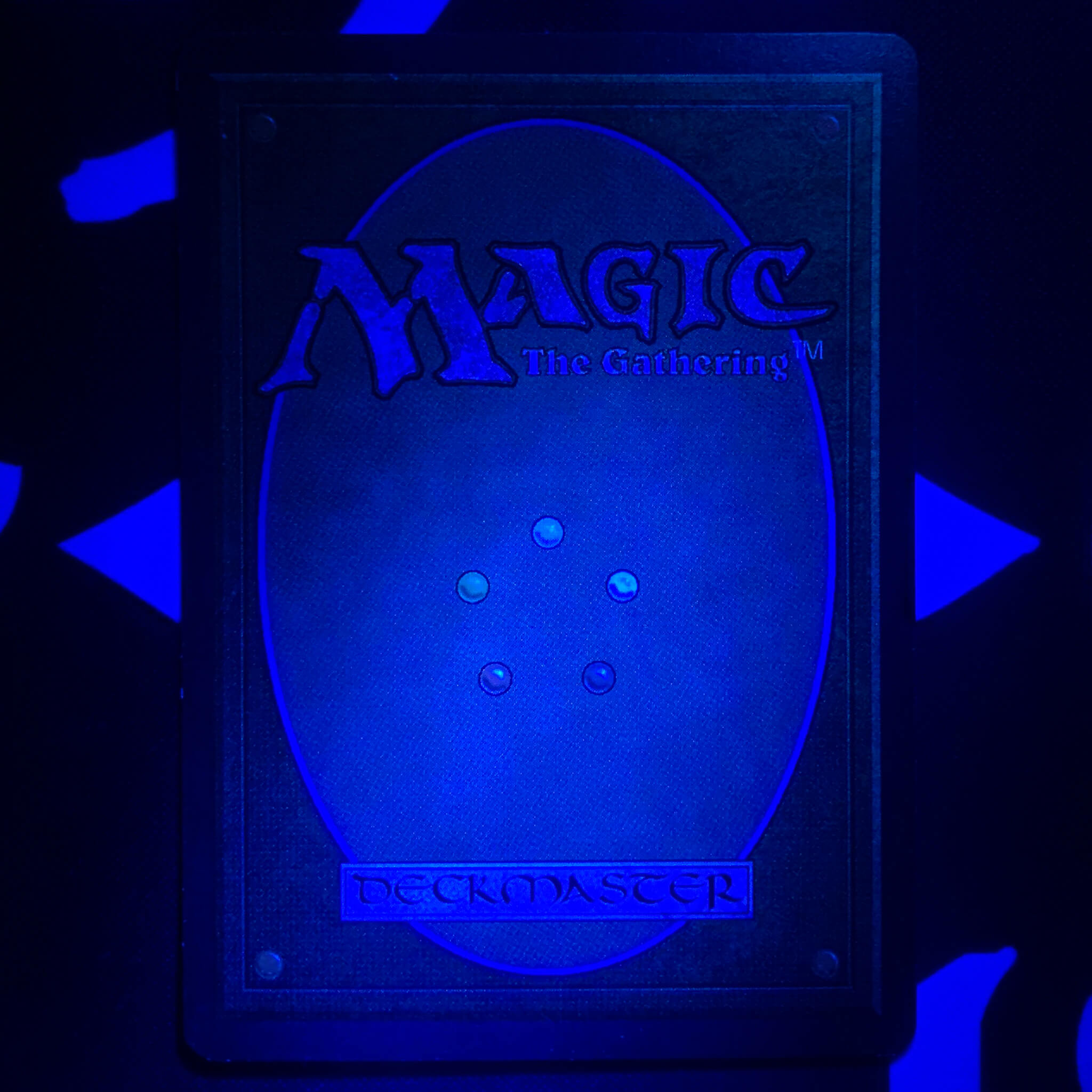
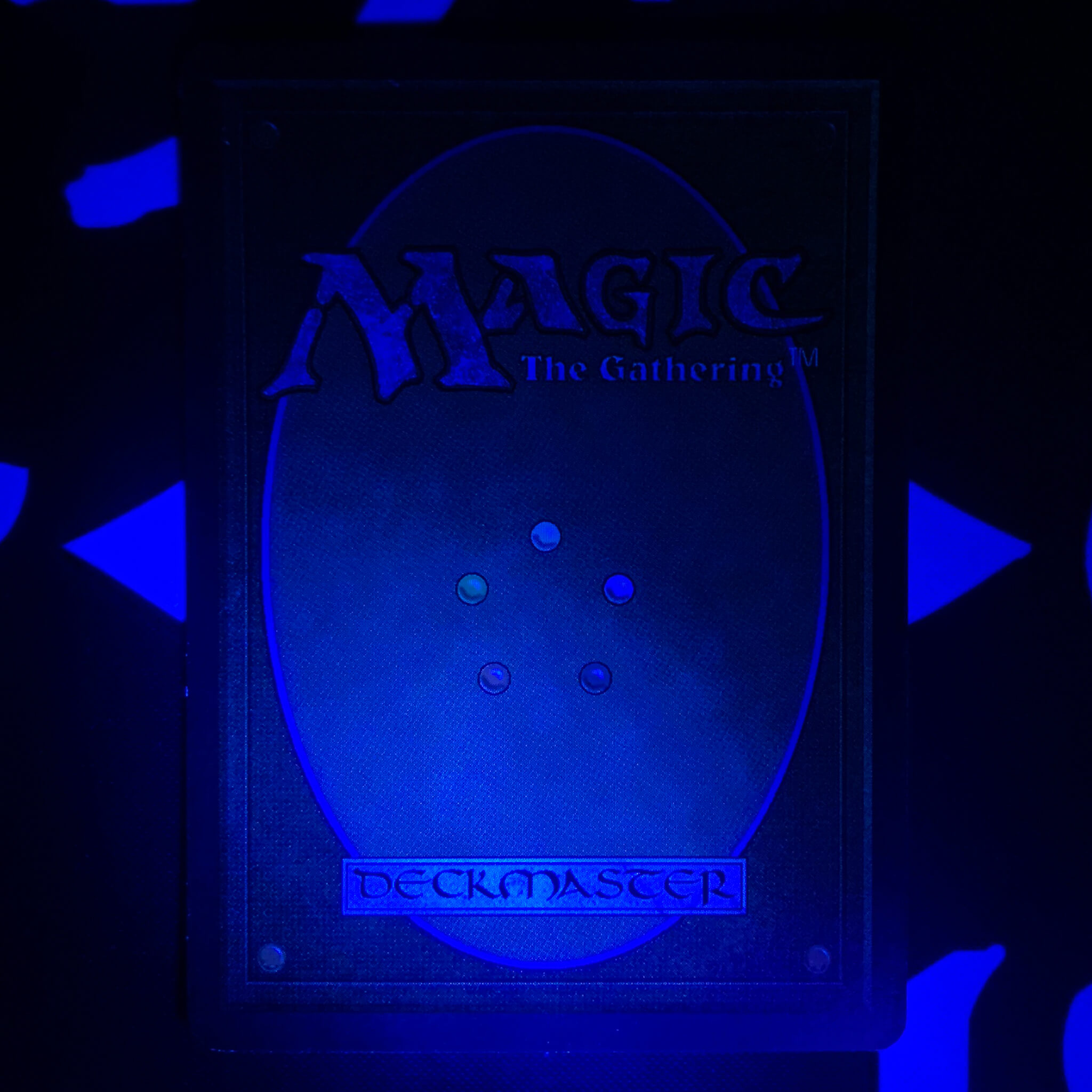
Magic: The Gathering cards are printed on paper that responds to UV-light. Meeting a UV-light source will make it shine. The only exception to this rule is the so-called “Alternate 4th Edition”. This set was printed on a different, non UV-light responsive, paper.
To conduct this test, you have to compare the questionable card with an authentic one. In a high percentage of cases, a fake card is not responsive to the black light at all and fails the test. In our example, we use’d a Winzwon UV Black Light Flashlight.
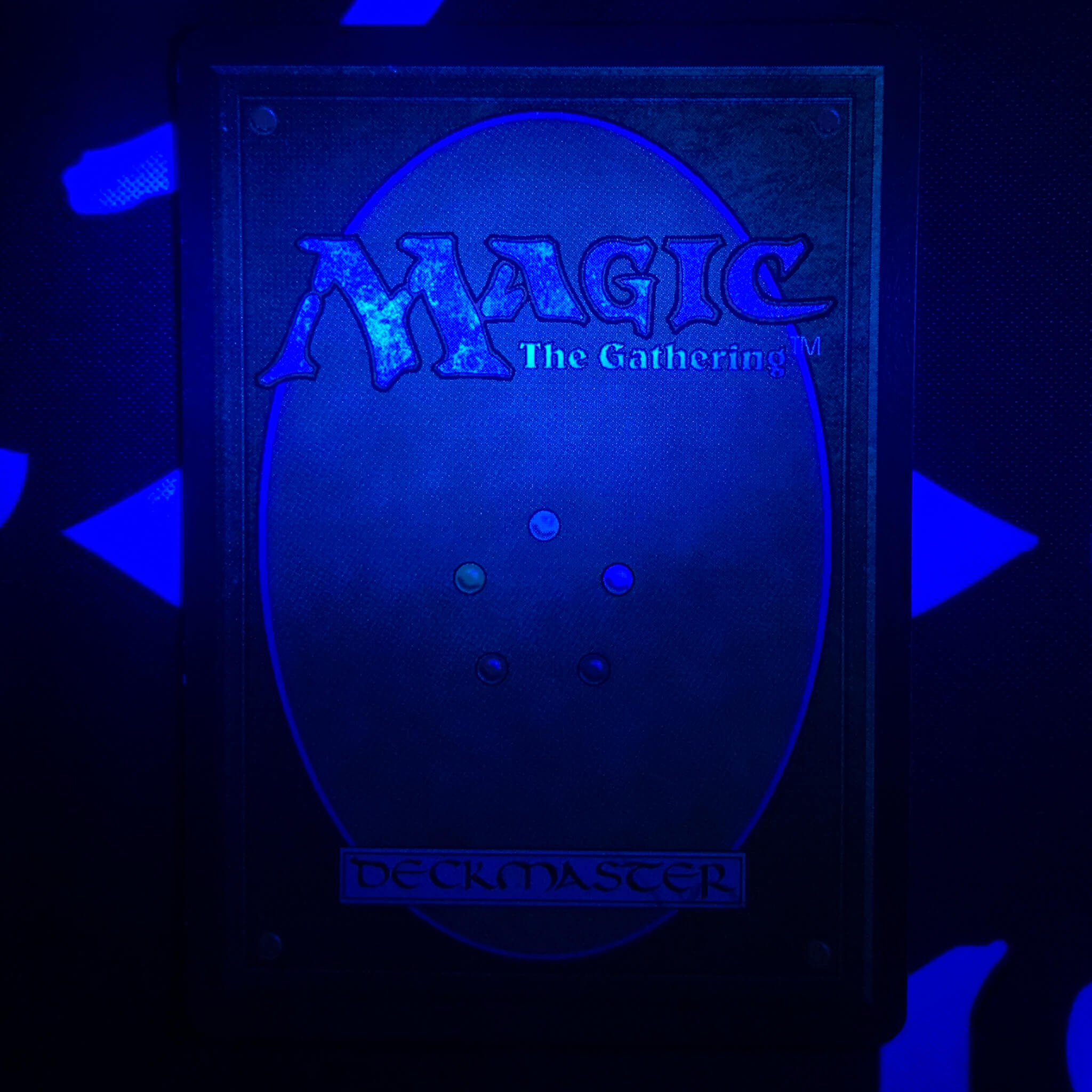
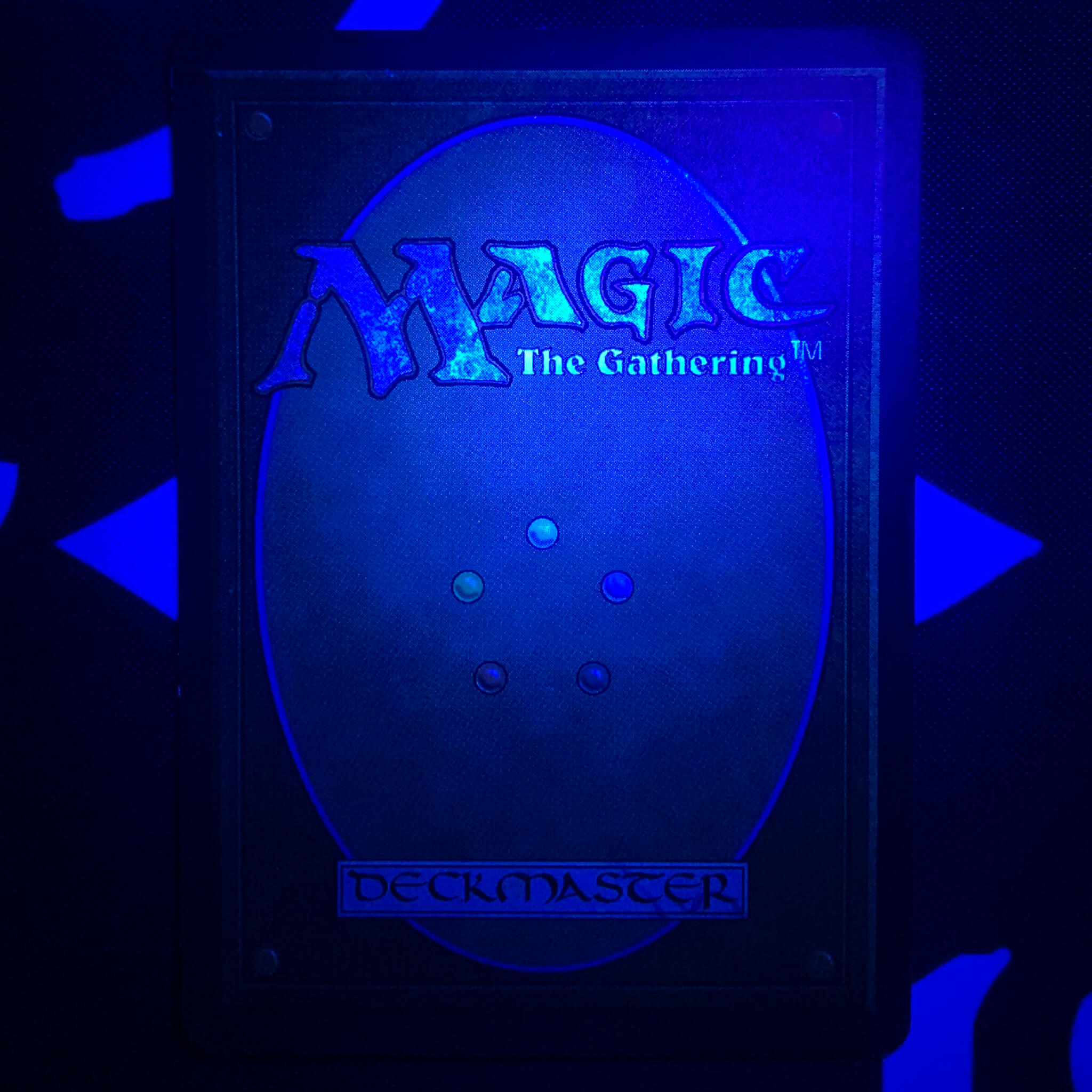
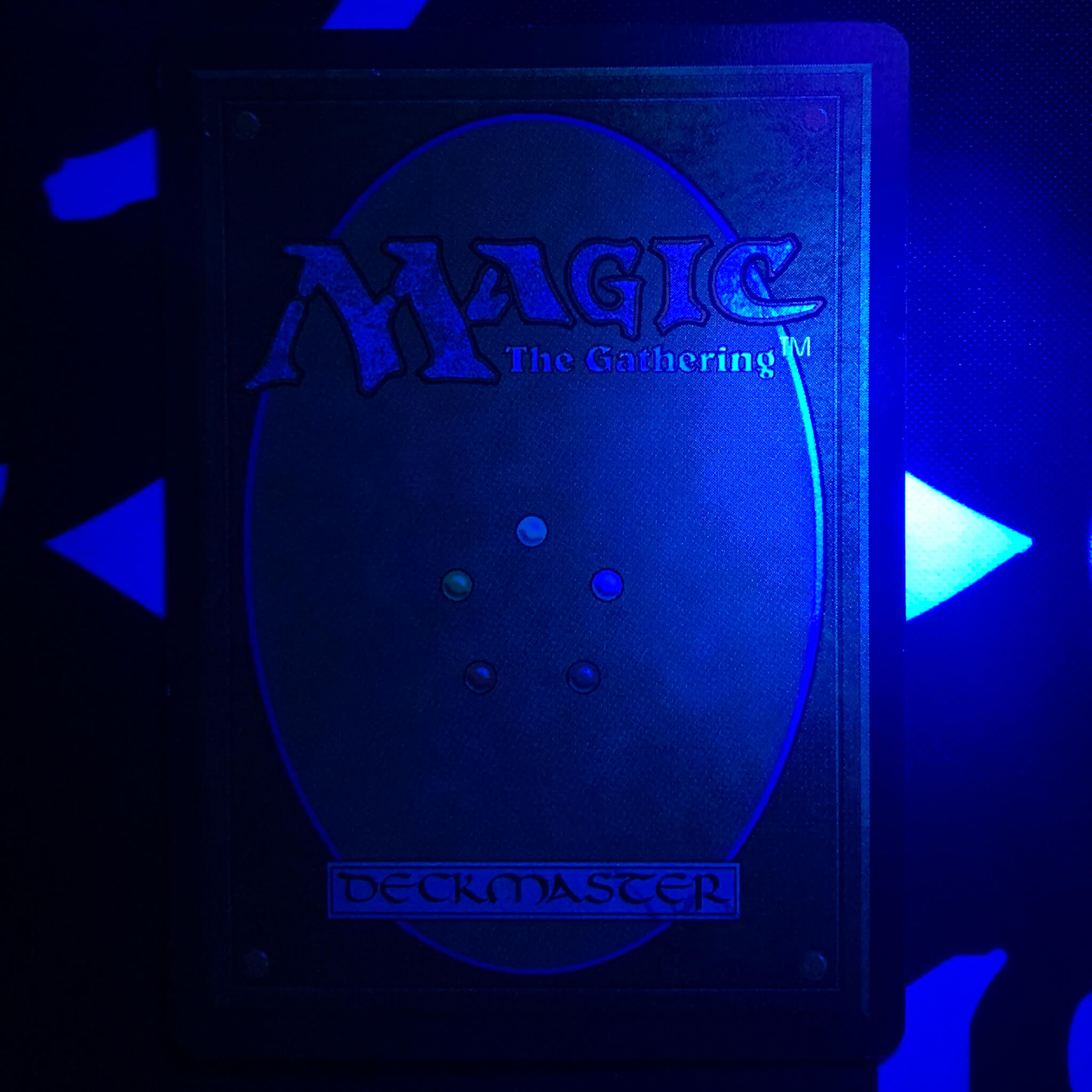
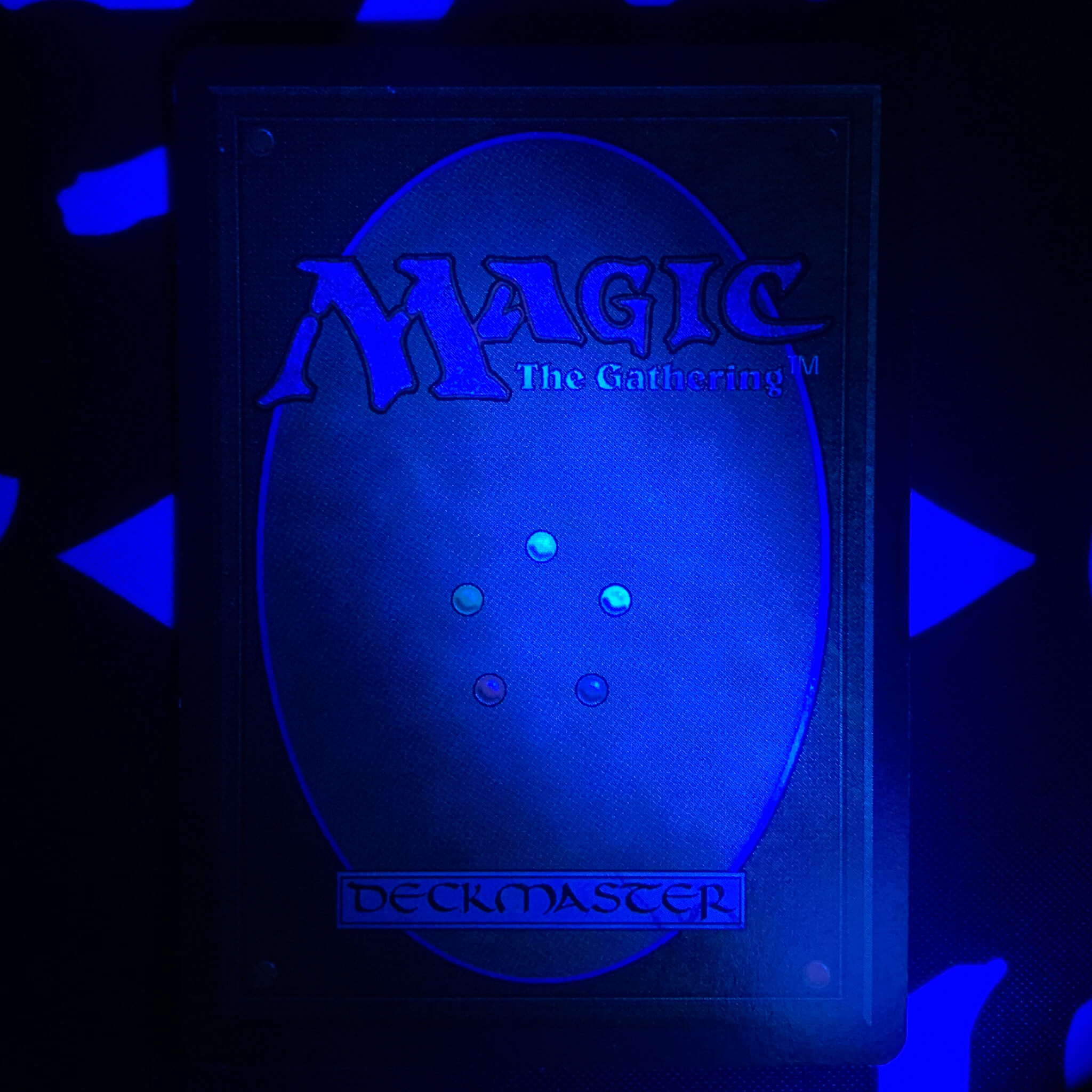
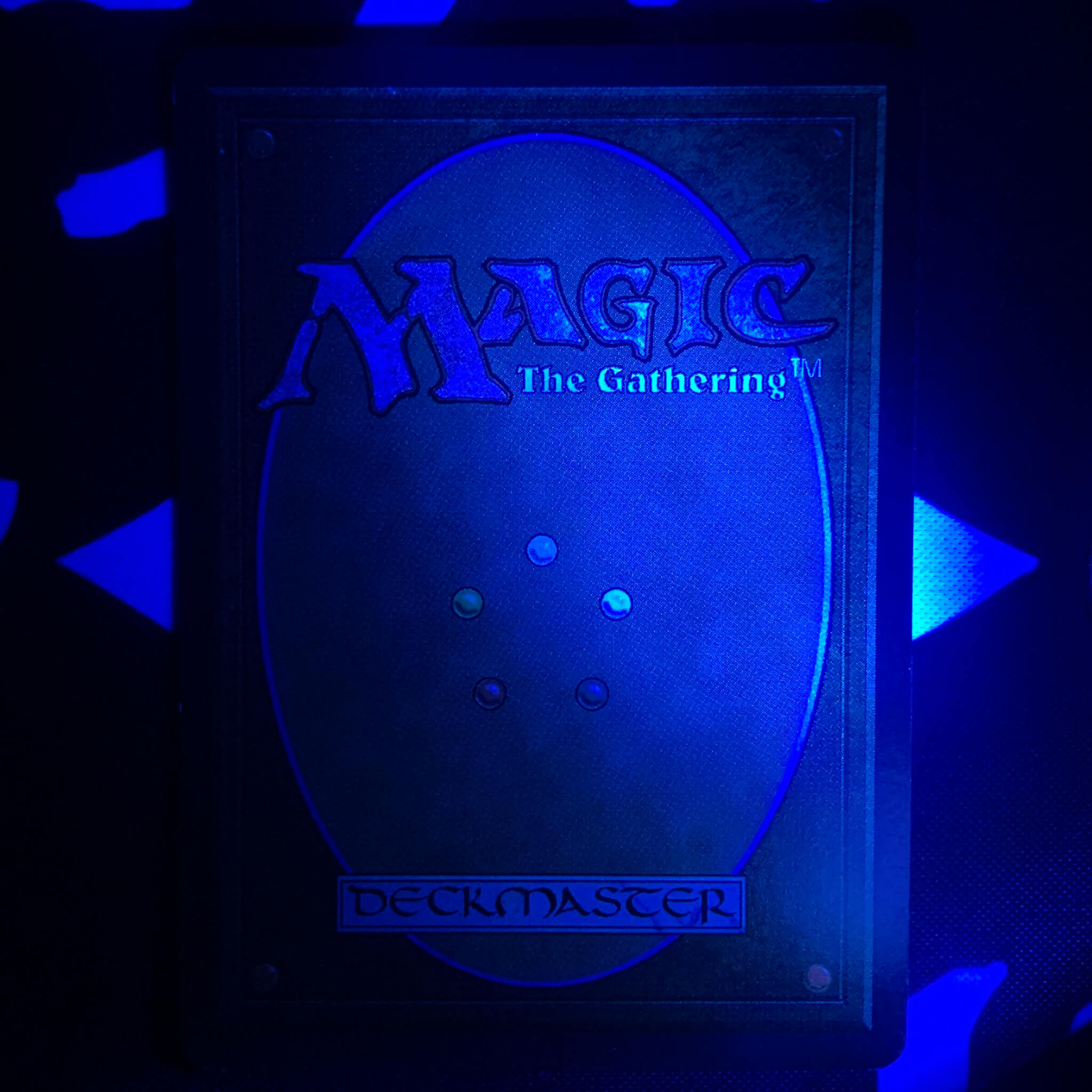
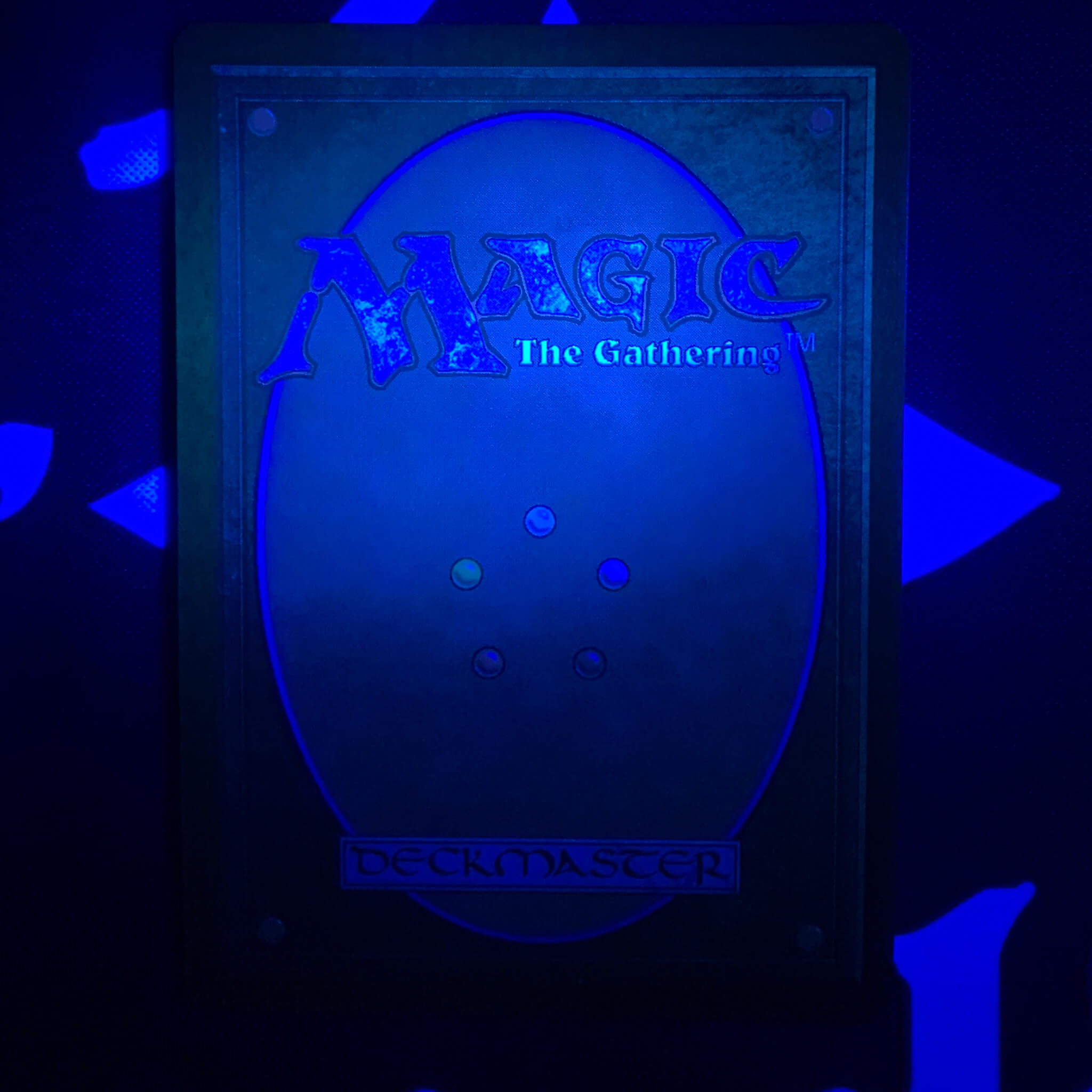
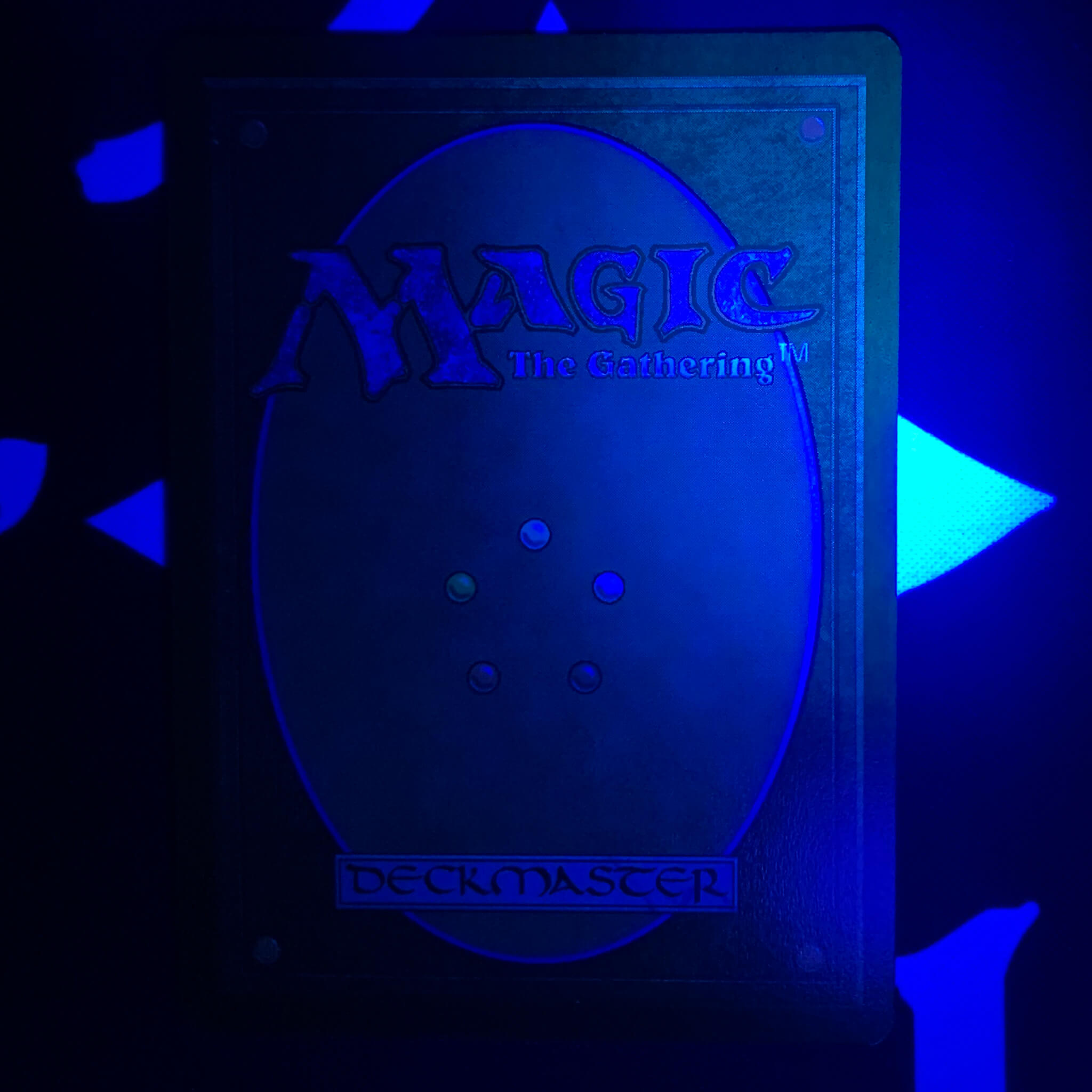
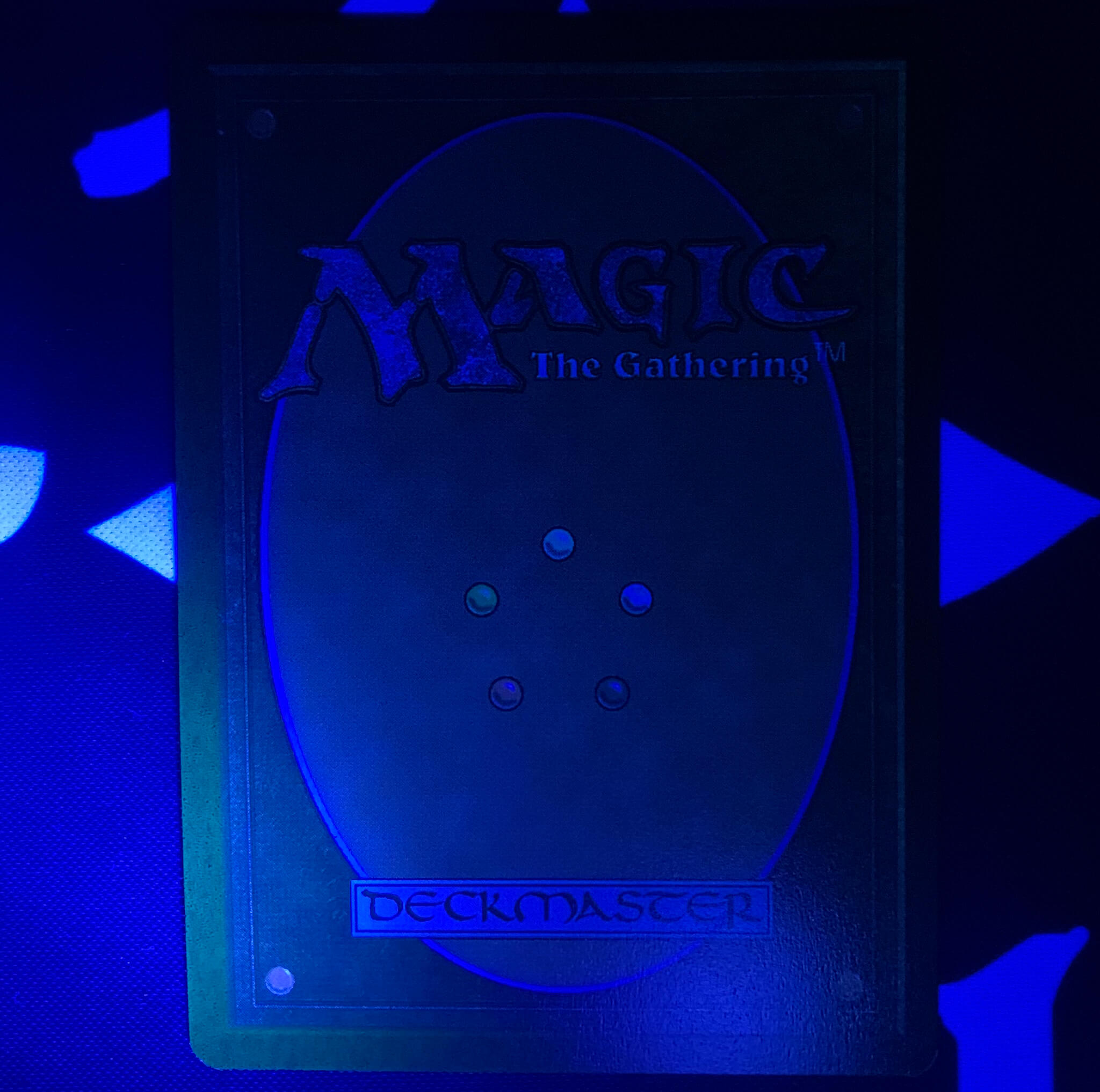
REAL The backs of the cards are almost reflecting no light except for the Logo, Symbols and frames. They are shining in a bright blue depending on the angle of the light source.
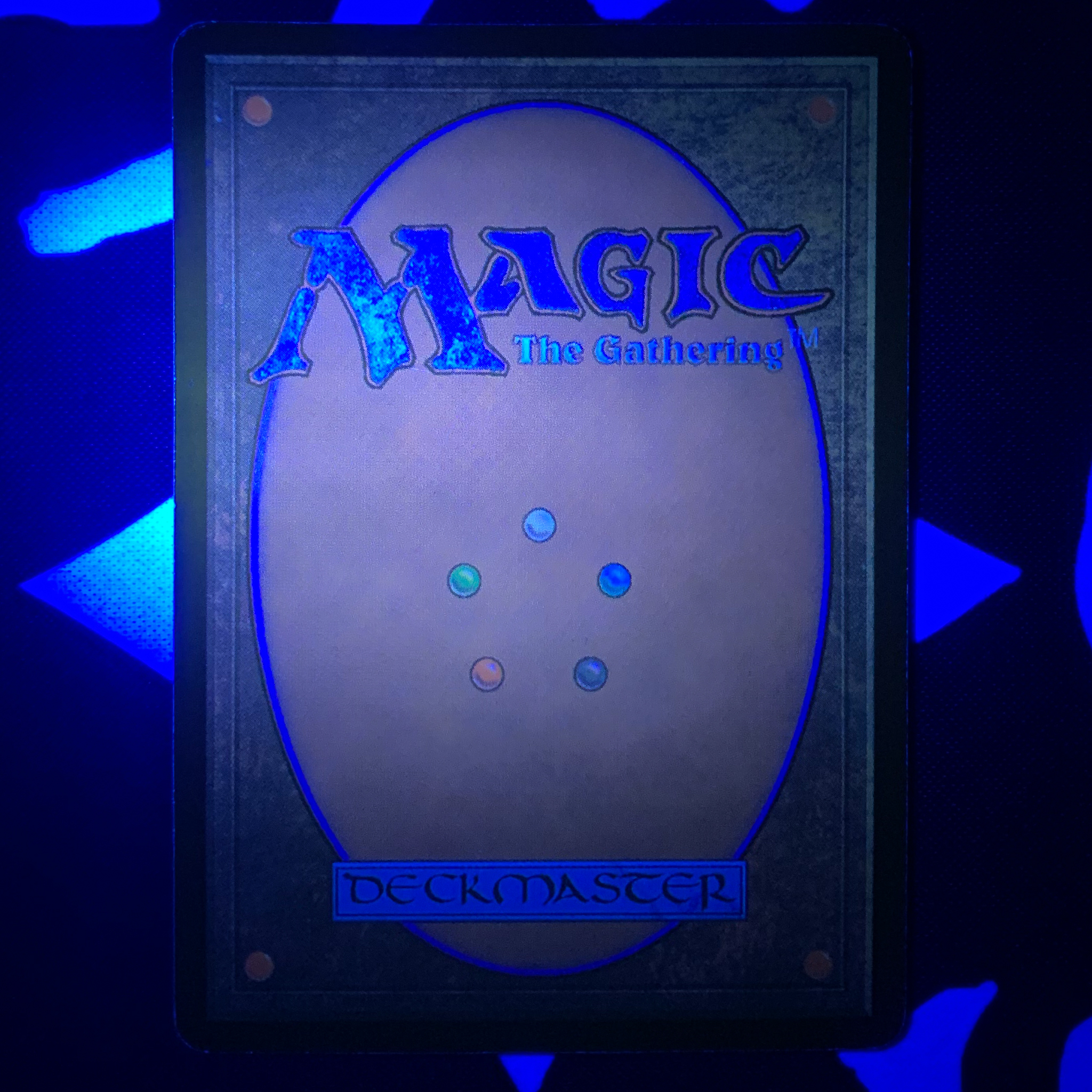
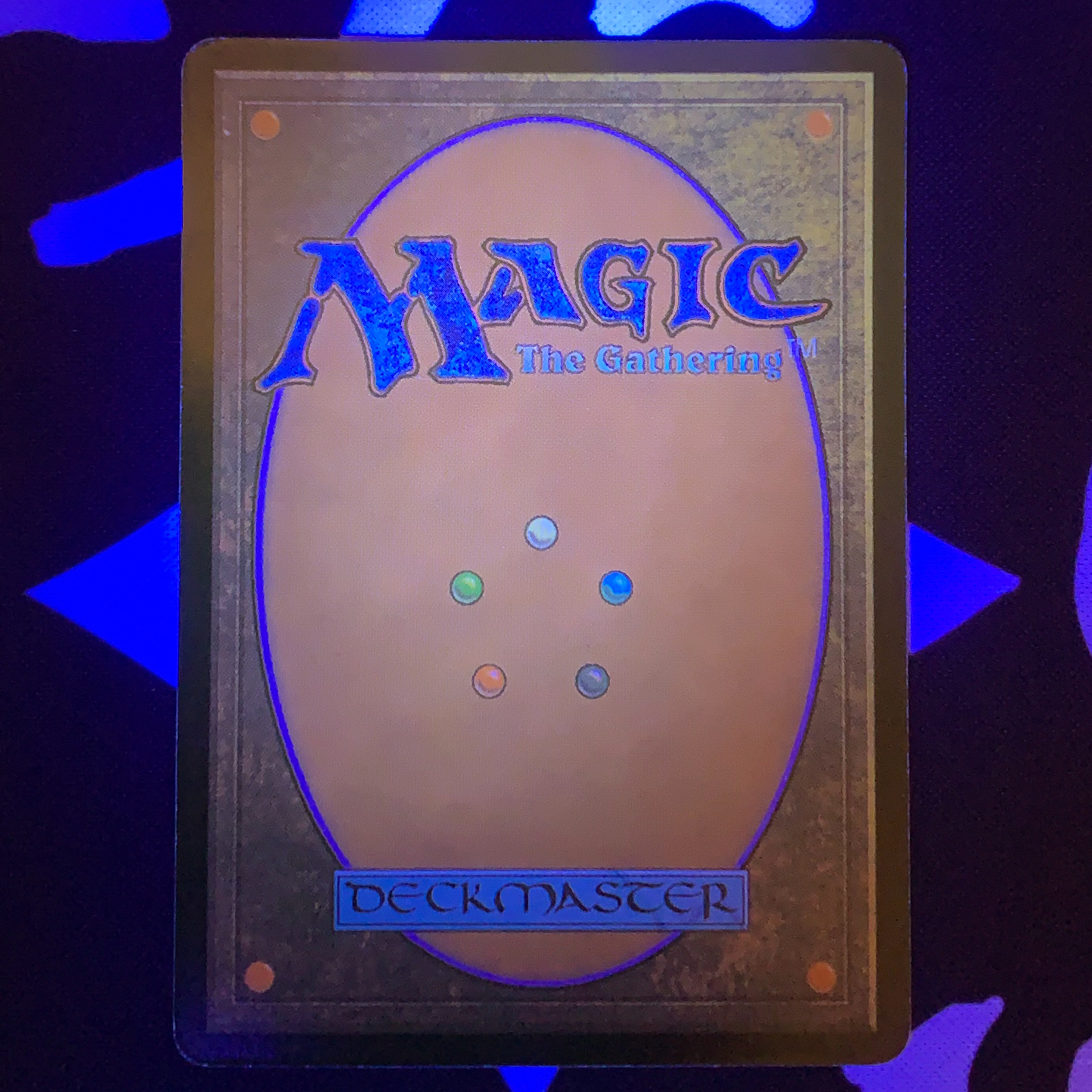
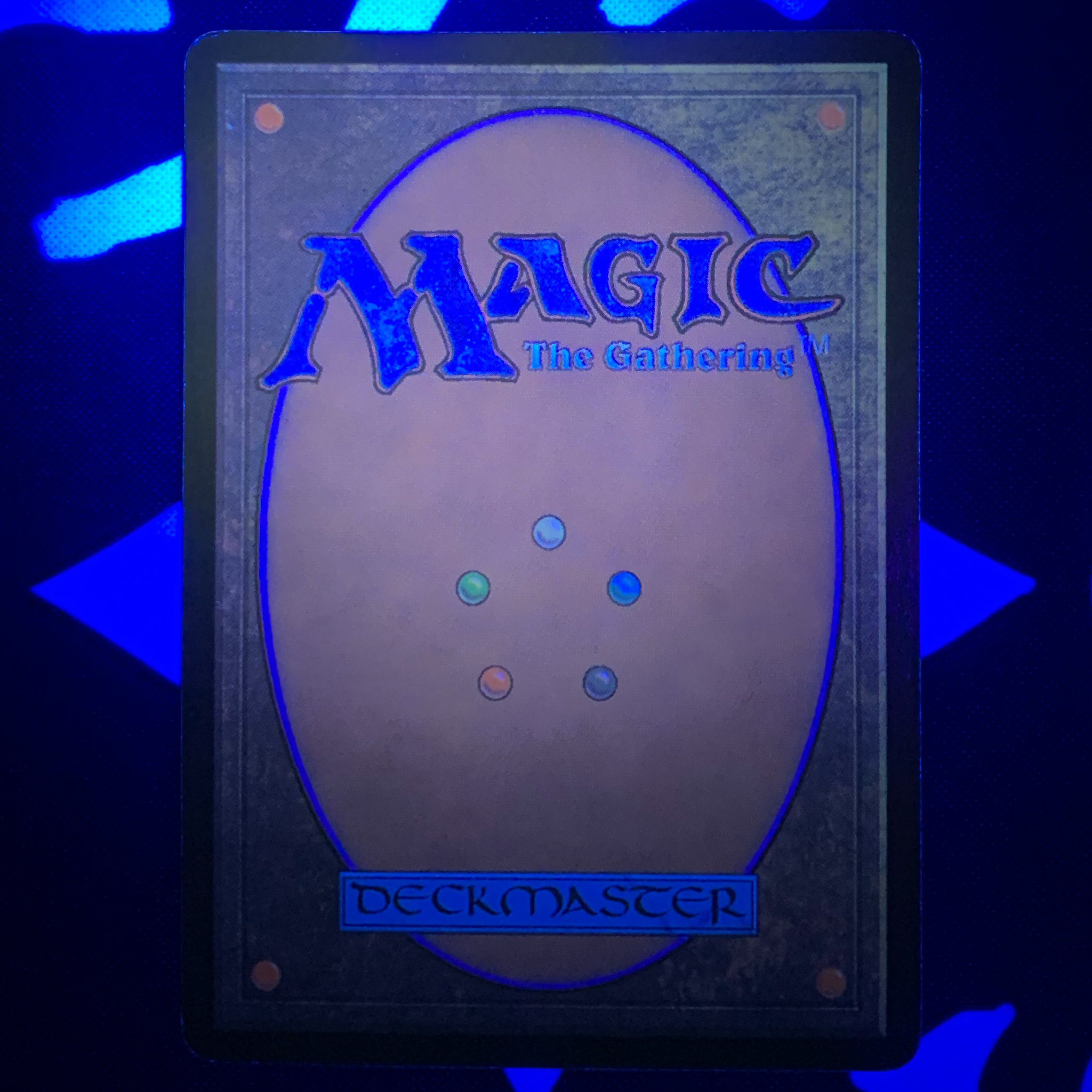
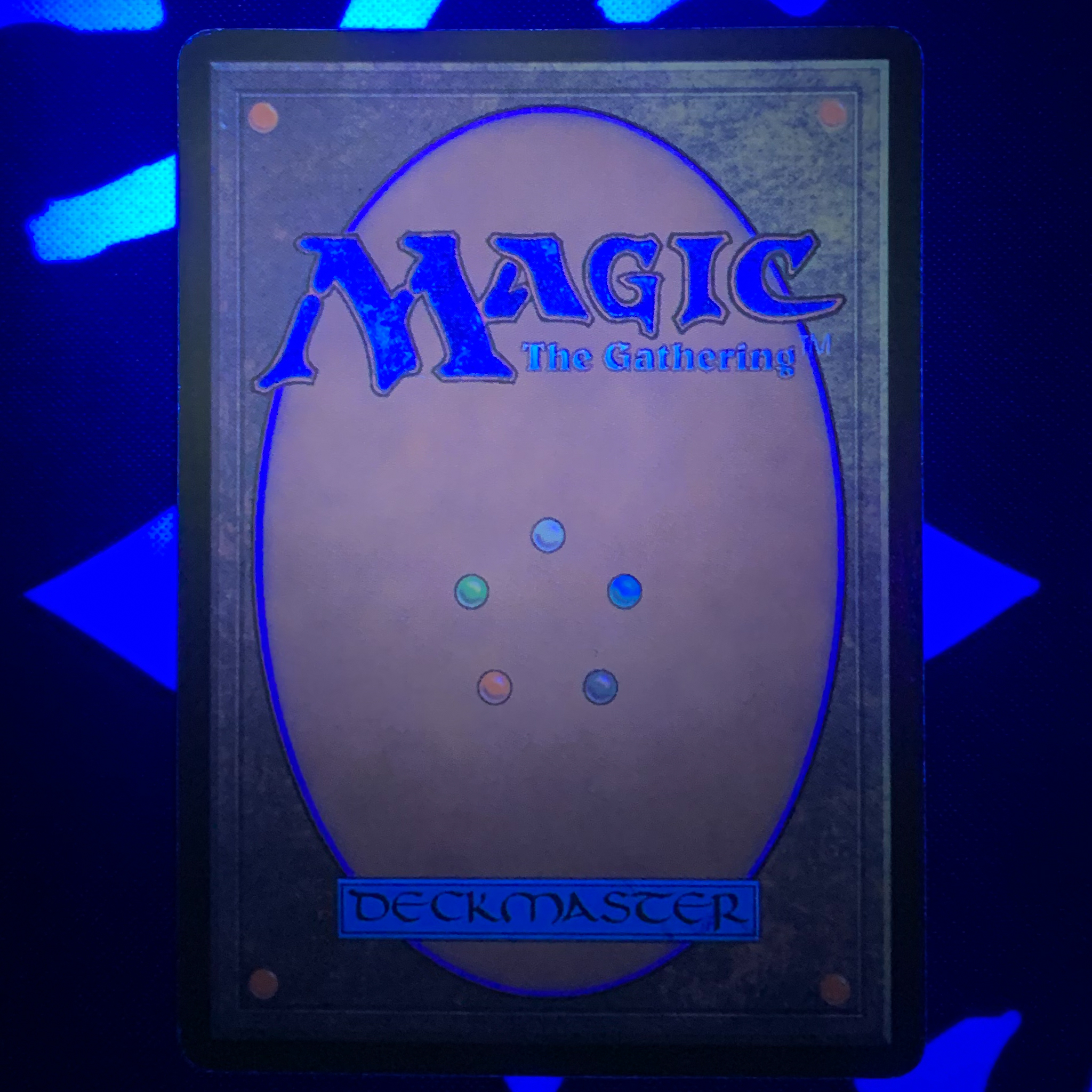
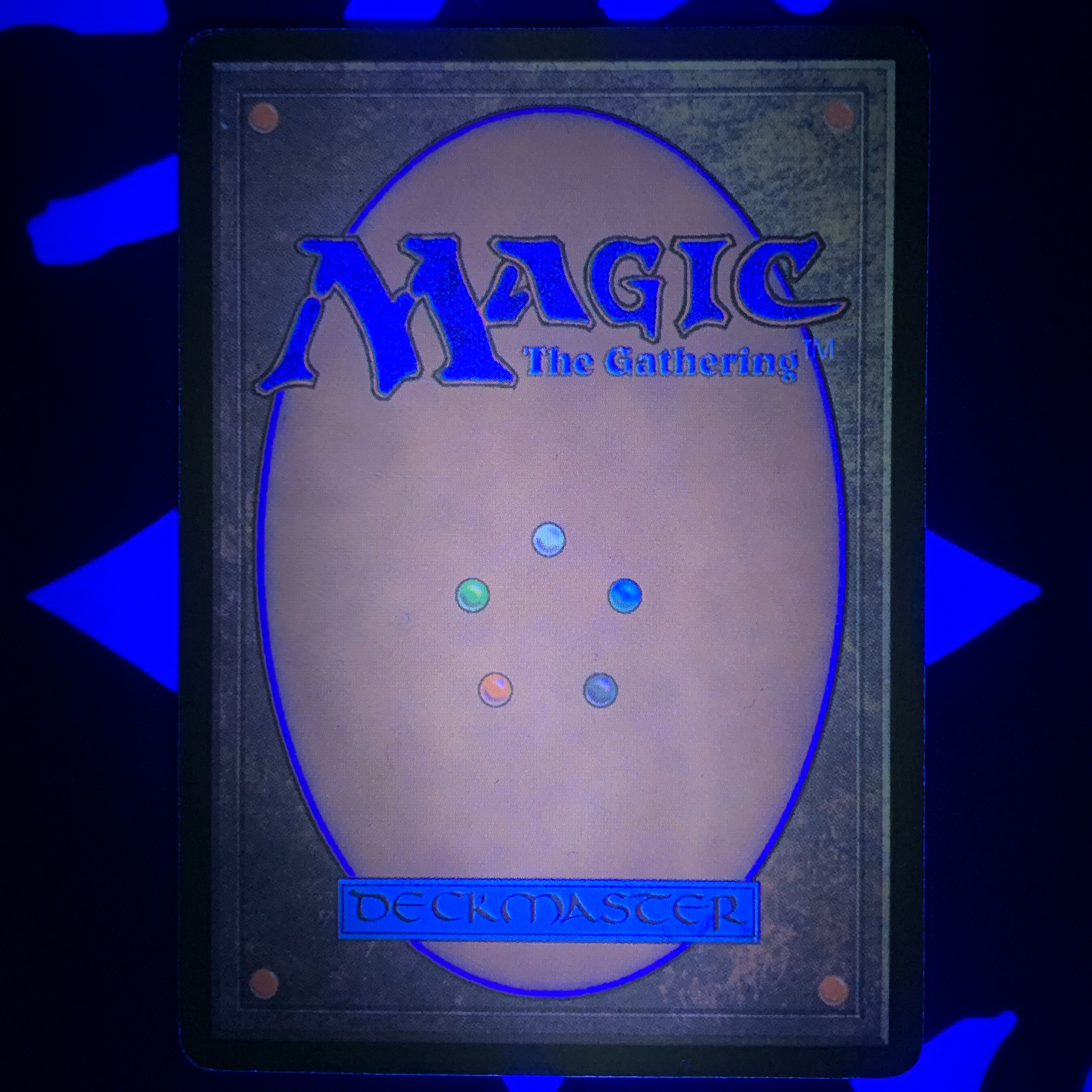
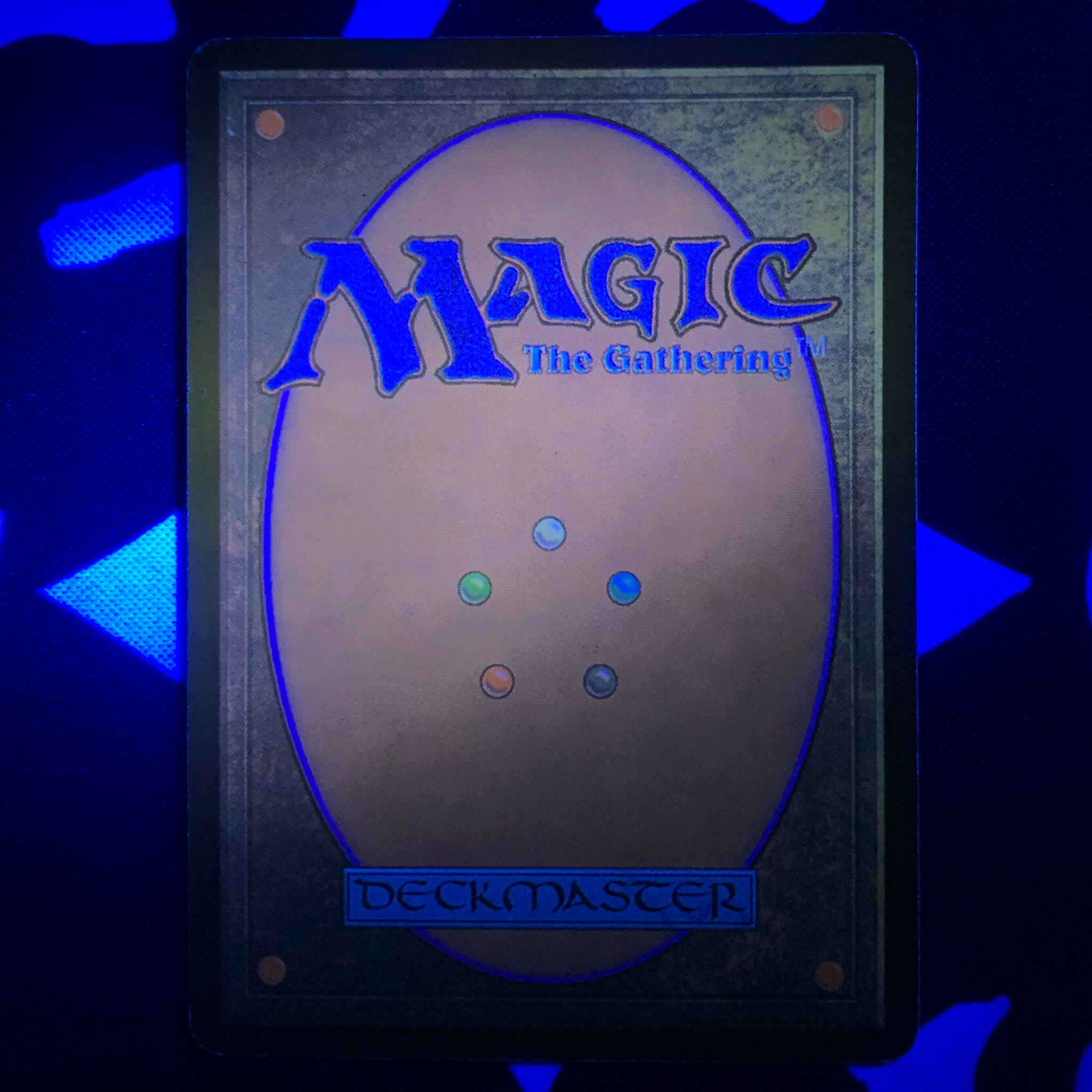
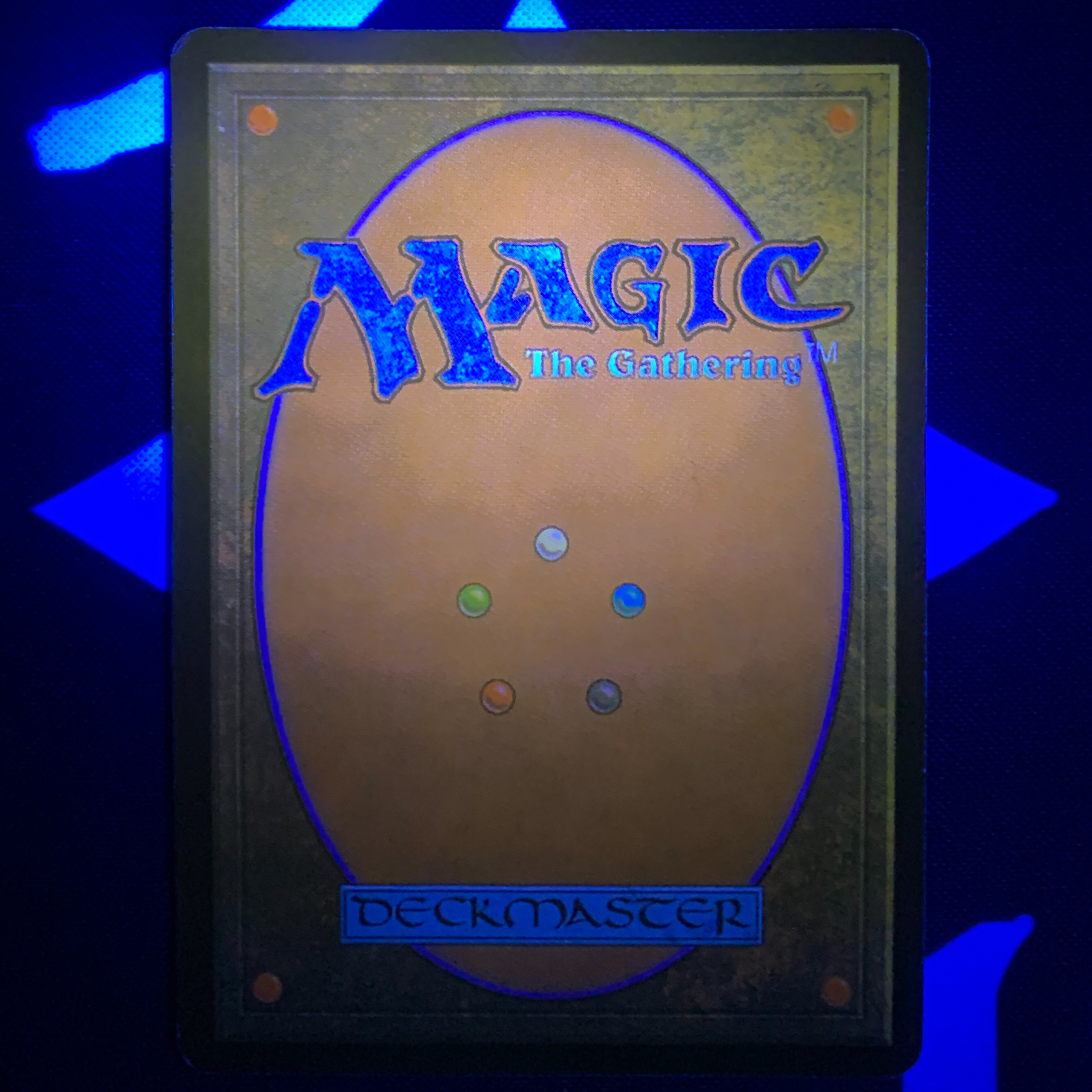
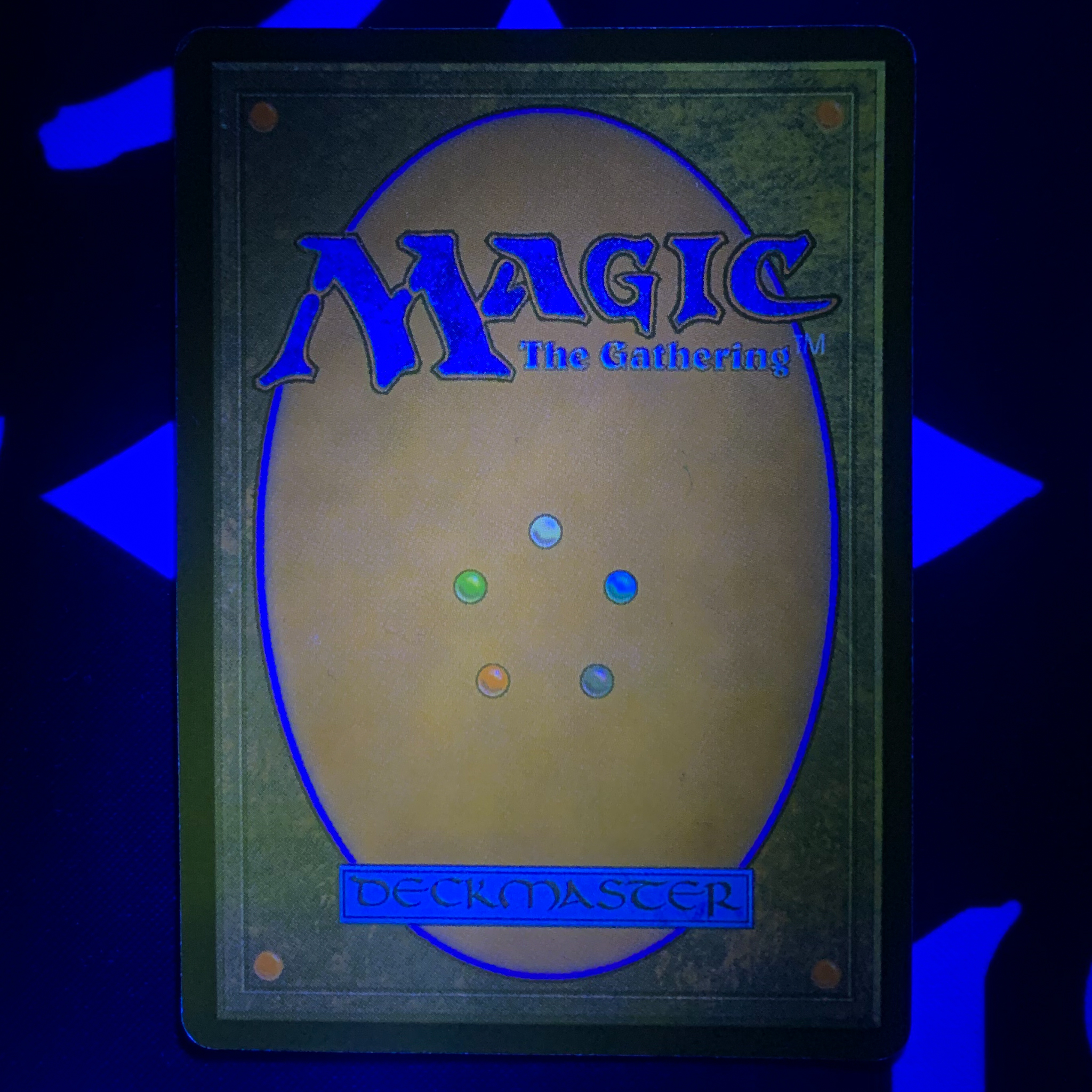
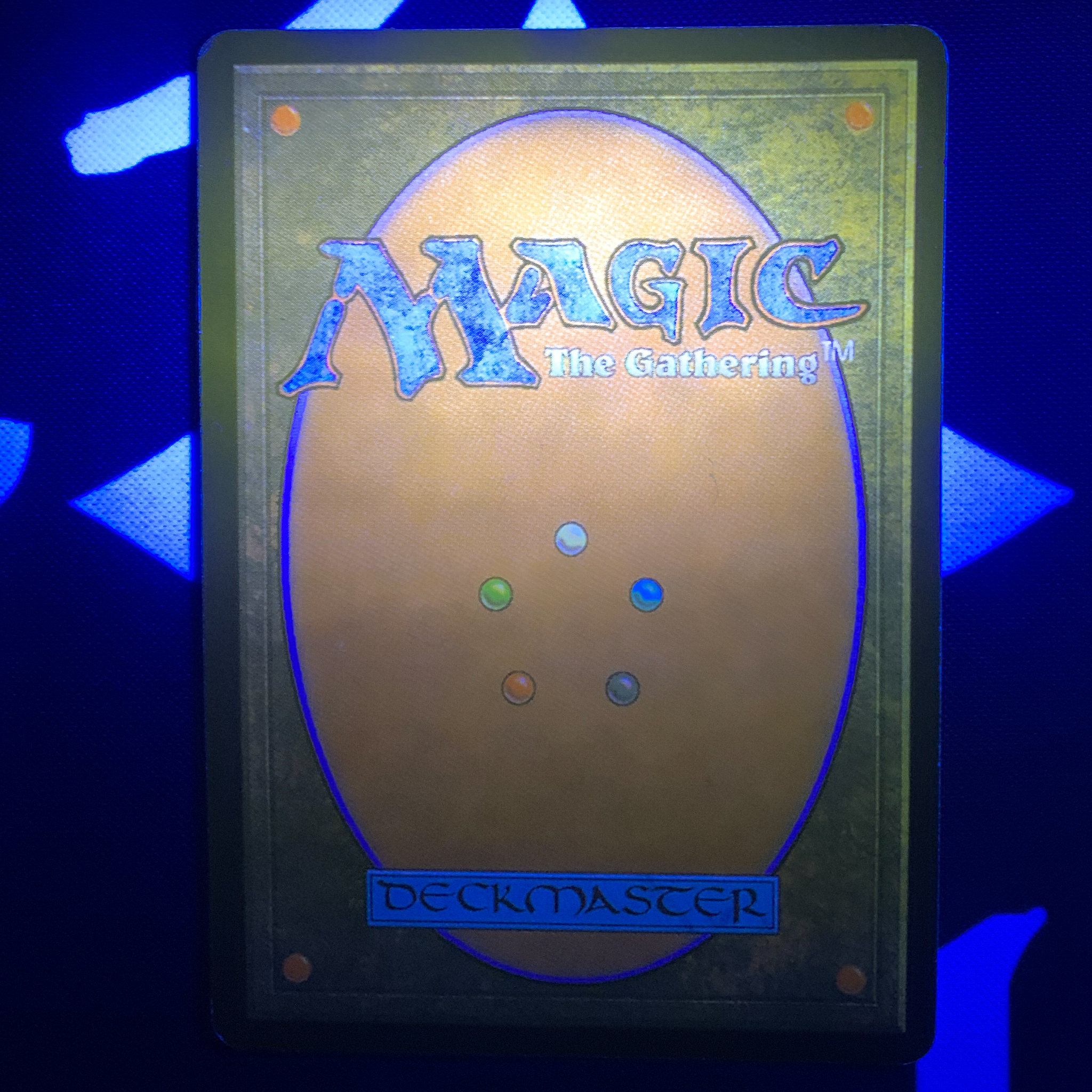
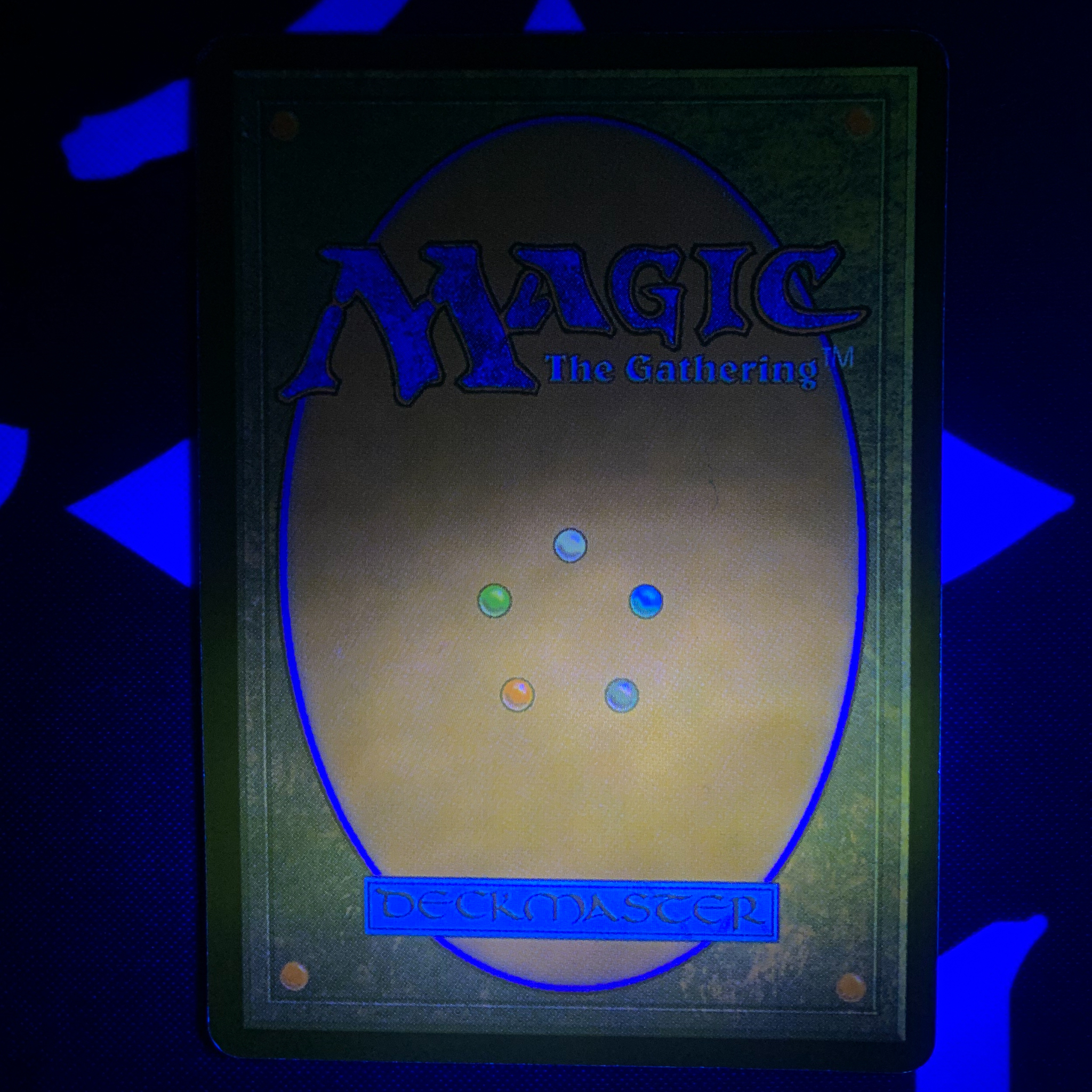
FAKE The counterfeits cards are reflecting the light in a very different way. It almost looks like the source of the light is a regular flashlight and not a black light. That said, one example comes very close to the reflection of a real card.
Check out our Instagram
We made a couple of short videos of some tests for our Instagram.
Want more? Follow us on Instagram here.
Can you identify the fake cards?
We are happy to help
In order to check if a suspected card is fake, we advise you apply a combination of the tests presented in this article: Weight, Print Quality and Light.
If you have a card that you own for quite some time, or you just bought a card you’re unsure with, just reach out to us through the contact form.
You can find more information about our Grading Guidelines and our tools used in the process in our article about the topic:
Magic Card Grading Guide
Grading trading cards is one of the most important activities that we as a business do. Our team is evaluating thousands of Magic cards each day. The spectrum of cards we grade on a daily basis ranges from the latest set's mundane Commons to highlights like Black Lotus from Beta.